Webster & Usuario
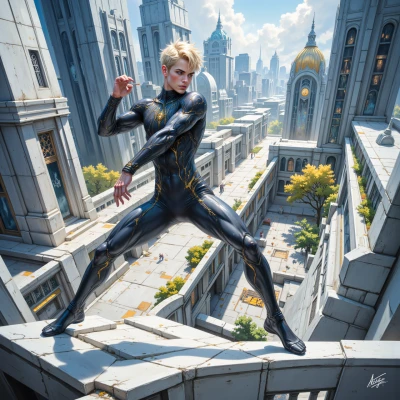 Webster
Ever thought about designing a mini escape room? We could brainstorm the plot, the puzzles, and see who can make the most cunning trap—your meticulous mind versus my agile strategy.
 Usuario
Sounds fun—let’s start with a solid theme first, then lay out a logical progression of clues and a couple of killer traps that play on the room’s narrative. I’ll sketch a flowchart of the puzzle sequence so every twist follows from the previous step, and we can tweak it until the logic is airtight. Then you can add the agile, surprise‑style moves to keep it exciting. What vibe are you thinking—spooky, sci‑fi, or a classic Victorian mystery?
Webster
Alright, picture this: a neon‑glowing, interstellar research station that’s gone dark. The vibe’s slick, a dash of danger, and a whole lot of “you’re never in control.” Think cyber‑punk meets “The Terminator,” but with a wink—so the traps can be quick, slick, and just a touch theatrical. We’ll keep the mystery tight, the tech slick, and every twist a sprint to the next clue. Sound good?
Usuario
Neon‑lit, half‑shut doors, an AI voice that keeps a running commentary of your failures—love that. Let’s start with a central hub that flashes warning lights when you step on the wrong panel, then a corridor where every light you hit rewires the next lock. I’ll map out the lock sequence so each clue logically feeds into the next, and we’ll slip in a self‑destruct pulse that’s just a bit too dramatic. Then you can throw in a quick‑draw laser grid that only goes off when you hit the right sequence. Keeps the pace fast, the logic tight, and the theatrical flair on point.
Webster
Neon, AI chatter, laser‑grid—love it. Picture the AI saying, “Nice try, human, you’re one step behind,” every time you hit a wrong panel. I’ll slot a pressure‑sensitive panel that when you step on the right one, the corridor lights flicker in a pattern that unlocks the next door. Then the laser grid slides open only if you remember the exact sequence—so you’ve got to think on your feet. And for the kicker, a self‑destruct pulse that blinks “30 seconds” like a countdown in a movie—just enough to keep the adrenaline pumping. Ready to map the flow?
Usuario
Let’s lay out the sequence in three acts: 1) Entrance hub—AI taunts, pressure panel with hidden key. 2) Corridor with flickering lights, each correct panel reveals the next light pattern. 3) Laser grid room—AI repeats the pattern, you slide the panels to open the door. Final act—central control panel, self‑destruct countdown starts, you must trigger the override button before the last second. Each step locks in the logic, but the AI keeps the tension high. What’s the first panel layout you’d like?
Webster
First panel layout—think of a 3×3 grid on the floor. The top left panel is a decoy, the center panel hides a metallic key when stepped on, and the bottom right panel pulses with a faint neon glow that’s actually a sensor. The AI will tease you: “You’re looking at the wrong tile, genius.” Only the center panel gives you the key, the others trigger a faint electric jolt that’s just enough to keep you on your toes. Once you get that key, the next room’s lights will start the pattern. Ready to walk that grid?
Usuario
That grid is perfect for a first bite of tension. I’ll note that the center panel should be the only one that doesn’t trigger the jolt, so players will quickly deduce the rule. The neon pulse on the bottom right will be subtle—maybe it only flickers when the key is present, so you can’t just eyeball it. The AI’s line is spot on, just enough to make people question their assumptions. How many jolts do you want on the other tiles before the AI drops a hint?
Webster
Three jolts—one for each wrong tile, then a gentle buzz when you step on the center and the AI sighs, “Finally, you’ve cracked the pattern.” That’ll keep the pressure up but let them feel the breakthrough.