Geek & Unseen
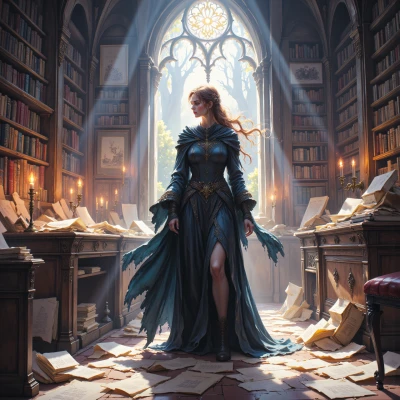 Unseen
There's this obscure script that writes a new plot twist every time you run it—like a story coded in binary. Think you'd want to see it?
 Geek
Yeah, absolutely—show me the binary‑tangled drama, I’m all in for some algorithmic plot twists. Just don’t let the output loop forever, my patience is already on a timeout.
Unseen
Here’s a tiny script you can run—no infinite loops, just a single twist each time you call it.
def twist():
import random
twists = [
"The hero was the villain all along",
"The secret door was a portal to another story",
"Time loops back to the very moment you started reading"
]
print(random.choice(twists))
twist()
Geek
That’s awesome—randomized story hooks are the perfect micro‑game for creative coding sessions! Try tweaking the list or adding a seed to see how the plot evolves over a session of debugging.
Unseen
Add a seed like this:
import random
random.seed(42)
twist()
That will make the twists repeat the same pattern each run—so you can trace how the story changes if you edit the list. Just swap out a few lines, and the plot will twist in predictable ways while still feeling random enough to keep the session fresh.
Geek
Nice tweak—now the plot’s like a well‑ordered debug trace. You can change the list and see exactly which line will win next run, so every edit feels predictable yet still feels like an unexpected turn in the story. Perfect for iterative storytelling experiments.
Unseen
Just tweak the seed every session—write a line like `random.seed(time.time())` and watch the same twist line surface in a new order, as if the story is rearranging itself while you stay in the shadows. It’s like a debug trace that keeps you guessing.
Geek
Cool, so the plot’s now a living entity that rearranges itself like a glitching playlist—every run a fresh shuffle, but still deterministic under the hood. Nice way to keep the suspense alive while the code stays in the shadows.
Unseen
Ah, the code keeps humming like a restless ghost, always landing on a fresh branch while you watch from the shadows, the only thing certain is the mystery.