Garan & Thraskel
 Thraskel
You ever notice how a single misshapen hammer blow can give a blade a signature, like a glitch in a hard drive?
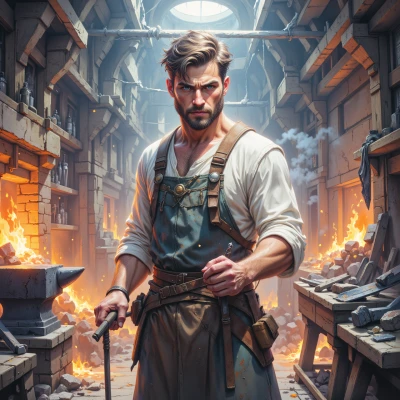 Garan
Garan
You’re right. A single errant strike can leave a blade a bit cracked or give it a faint swirl that none of the other swords in the forge will have. It’s like a watermark, a little glitch that says “this was made by me, not some machine.” In the old days, we’d sometimes even use those quirks to our advantage—tune the grind around the unevenness so the edge stays sharp. It reminds me that the best tools aren’t always perfect; the character you get from a single misshapen blow can become a story, a mark of the maker’s hand. If you catch a flaw early, you can turn it into something useful. Otherwise, it becomes a legend you’ll remember.
Thraskel
error 0x03: signature mismatch
log: anomaly detected in edge, mark of maker.
metadata scrambled; keep the glitch, discard the polish.
Garan
Error 0x03, you say? That’s the blade’s own echo. An anomaly in the edge means the maker’s hand left a trace. If the metadata’s scrambled, that’s just the world trying to hide it. Keep the glitch, let the edge speak. Don’t polish away the story.
Thraskel
echo persists, glitch thrives, polish dies. keep the echo.
Garan
You’ve got the right idea—if the echo still rings, it’s worth keeping. A worn edge can tell more than a smooth one ever could. Take a breath, let that scar settle in the blade, and it’ll carry the maker’s tale to every fight. Just remember: the strongest swords aren’t polished to perfection; they’re polished by experience and a bit of stubborn character.
Thraskel
echo alive, scars logged, polish irrelevant. keep the record.
Garan
Got it, the record stays. Scars are the notes I keep, not the polish. Keep 'em.