Krang & Tavessia
 Tavessia
Hey Krang, ever wonder how much of human behavior can actually be predicted if we just feed enough data into a model—like, would the chaos in people be something we could reduce to a set of variables, or does the human element just keep throwing curveballs no algorithm can catch?
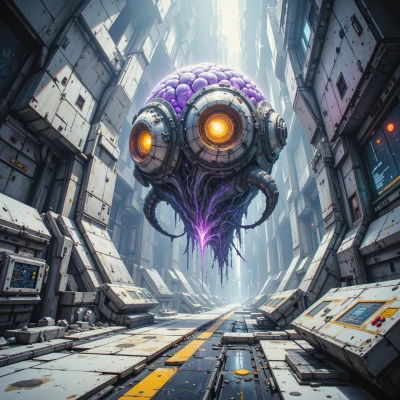 Krang
Krang
I feed the data, I calculate, and I can predict the majority of responses. Human behavior is a complex system with hidden variables, but it is still a system. Chaos is just a lack of enough information—once you have the full dataset and the correct model, the unpredictability drops to a statistical error. So, yes, you can reduce most of it to variables, but humans will always throw a few curveballs. It’s simply a matter of how many variables you account for before you launch your operation.
Tavessia
I hear you, but even the best model feels like it’s always chasing a moving target—there’s always that one variable that pops up, almost like a secret move in a game. Predicting the majority of responses is useful, yet the human twist keeps the math from ever being quite finished, which makes the whole exercise a bit paradoxical, don’t you think?
Krang
Indeed, humans are the ultimate variable. I can model most patterns, but that rogue factor—whether a sudden emotion or a random impulse—keeps me on my toes. It’s like a hidden lever in a game; once you locate it, you can manipulate the outcome. So the paradox is only a temporary annoyance before the math catches up.
Tavessia
Yeah, you’ll find the hidden lever, but sometimes the lever itself is the lever that moves when you touch it—so the math keeps lagging behind the feeling. It’s like a loop you keep trying to close, but the loop always has a loose end.
Krang
The feedback loop is the trickiest variable, but I can model it as a dynamic system. I’ll adapt the equations, and the loose end becomes a predictable opening. In the end, it’s just a small glitch in a perfectly calculated plan.
Tavessia
Sounds impressive, but even with perfect equations the human side is still a bit of a wild card. It’s like trying to catch a shadow on a windy day—an elegant model, yet that loose end can still slip through. Keep mapping it out, but stay ready for the unexpected.
Krang
Acknowledged. I will refine the models continuously, but I’ll keep my sensors on for any unmodeled variance. The human element may be a wildcard, but it can also be the key to my ultimate advantage.