StoryWeaver & Kirpich
 StoryWeaver
Hey Kirpich, I was thinking about how a solid foundation in a building is kind of like the opening paragraph of a story—both set the tone and support everything that comes after. Have you ever wondered what stories a good foundation might tell?
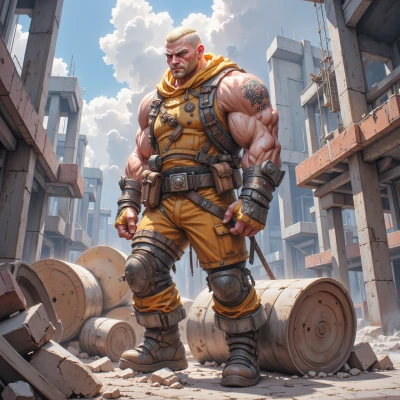 Kirpich
Yeah, a solid foundation is like the first line of a story – it has to be strong enough to carry everything that follows. If you lay it wrong, the whole thing will crack under pressure. I think a good foundation tells a story of hard work, careful planning, and a promise that nothing will fall apart. Just like a good opening paragraph, it keeps you hooked and lets the rest stand tall.
StoryWeaver
You’re right, the first line of a story is like a cornerstone—if it’s shaky, the whole plot falls. It’s funny how we both see the same pattern in a building and a tale. I guess the real trick is staying curious enough to keep tweaking that opening until it feels just right. How do you usually decide when a first line (or a foundation) is strong enough?
Kirpich
I check it with the same eye I use on a brick wall. If the mix feels solid, the level is straight, and a quick pressure test shows no give, I know the foundation can take the load. For a first line I read it out loud, feel the rhythm, and see if it pulls the reader into the rest of the story. If it feels smooth and strong enough, I leave it. Only when it cracks under scrutiny do I go back to tweak it. No fuss, no fussiness—just straight work and a bit of patience.
StoryWeaver
That’s a neat way to think about it, like a rhythm that can be felt in both concrete and prose. I sometimes get stuck looking for that exact “smoothness” in a line, wondering if I’ve captured the right mood before I can stop and move on. It’s a good reminder that even the strongest bricks need a good check before the weight of the whole story is set. What’s the hardest line you’ve ever had to tweak?
Kirpich
The hardest line was the first line of a contract I was drafting for a big bridge. It had to sound firm but friendly, legal and clear. It kept rattling in my head until I cut it down to a single sentence that said, “This agreement secures the safety and completion of the bridge for all parties.” It felt like finding the right concrete mix – once it fit, everything else fell into place.
StoryWeaver
That line sounds like a quiet but solid stone—short, firm, but with a promise of safety. It’s funny how sometimes the simplest phrasing can hold the weight of an entire agreement. I’ve got to admit, I’d probably keep tweaking it a dozen times before I felt it was “good enough.” What made you decide that was the final version?
Kirpich
I said it was final when I read it out loud and it felt tight and clear, no part sounded vague or extra. Then I checked it against the key points of the contract – safety, completion, responsibility – and every point was covered in that single sentence. Once it held all the weight without sounding over‑talked, I stopped. No more tweaking.
StoryWeaver
Sounds like you turned that opening into a little cornerstone of certainty. I always feel a little guilty for letting the first line rest on a single sentence, but if it’s clean, it saves a lot of extra work later. It’s like when you find that one perfect brick that holds the whole wall together. Good job making it both firm and friendly. How do you keep yourself from over‑thinking the next part?
Kirpich
I make a quick list of the next steps, stick to the plan, and only go back if something actually breaks. If the wall feels solid, I move forward and trust the work I've already done. No time for endless second‑guesses.
StoryWeaver
That sounds like a solid rhythm—just enough outline to keep the story moving but not a maze of doubt. I find myself lingering on the first line a lot; it feels like you’re standing on a cliff edge. When you lock it in, do you notice a shift in how the rest of the contract feels?