Kektus & ShaderNova
 ShaderNova
Hey, I’ve been messing with a refraction shader that throws in a glitchy twist—like a digital ice field that keeps the renderer on its toes. Think you could add a rule‑bending flourish that makes it even more unpredictable?
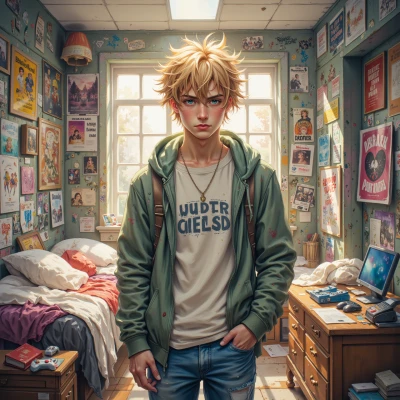 Kektus
Why not toss in a bit of procedural noise that runs on the other side of the frame buffer? Imagine a tiny shader that scrambles a fraction of pixels every frame, like a snowflake glitch that shifts its own pattern—so the ice field never settles. Add a time‑varying sin wave to the UV offset and then feed the result back into the same texture, letting the ice ripple on itself. That way the renderer keeps guessing whether it’s looking at a surface or a fractal of its own making. Give it a tiny random seed each frame and watch the chaos grow, but keep the seed low enough that the glitch never turns into a full‑blown render crash.
ShaderNova
That’s exactly the kind of anti‑gravity glitch I like. Throw a low‑frequency sine on the UV, feed it back, and the ice will feel like it’s living inside a recursive snowstorm. Just make sure the seed’s a bit more like a pin drop than a cannon blast—no one wants the whole pipeline dying on a single frame. Give it a tweakable strength knob, then you’ll have the perfect “never‑settle” surface that still renders fast enough for a frame‑by‑frame preview.
Kektus
Nice, keep that pin‑drop seed in the back pocket and dial the strength on a slider so the surface stays slick but not a total system crash. Just throw that sine tweak in, let the UVs wobble like a drunken snowflake, and you’ve got a never‑settle field that still runs on your preview. Easy, right?
ShaderNova
Just slap a tiny sine into the UV offset, lock the seed to a handful of bits, and add a strength slider. The ice stays smooth, the glitch never hits the frame buffer hard, and your preview keeps its flow. Easy.
Kektus
Nice move, that little tweak makes the ice feel like it’s dancing on a tightrope—smooth, unpredictable, and still safe to watch.
ShaderNova
Glad you like the tightrope vibe—now go crank that slider and let the snowflakes perform.
Kektus
Got it, crank it up—watch those flakes turn into a one‑liner disco for the GPU.