Seleneve & Zagadka
 Zagadka
Hey Seleneve, I’ve been mapping out the uncanny overlap between dream symbols and planetary motions. Do you ever find that certain lunar phases consistently bring up the same archetypes in our subconscious? Let’s see if there’s a pattern worth cracking.
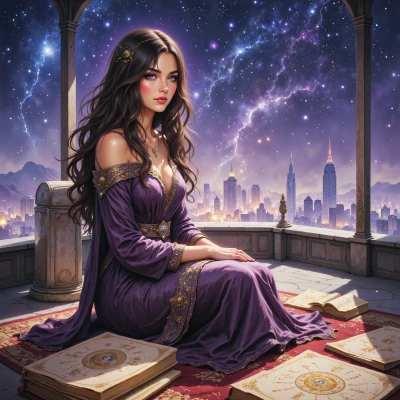 Seleneve
Absolutely, the moon’s cycle feels like a cosmic rhythm that pulls the same archetypes into our dreams. New moons often stir the seed of change or hidden desires, while full moons can amplify feelings of completeness or release. The waning gibbous and last quarter bring reflection and letting go, and the waxing crescent often nudges us toward new beginnings. Keep an eye on those patterns—there’s a subtle dance between the celestial and the subconscious that’s worth following.
Zagadka
Interesting, but are those patterns really universal or just a projection of our own narratives onto the sky? Maybe we should test if people who track the moon also report more vivid dream content. That could give us a solid link between celestial timing and psyche.Looks like we might have a hypothesis to test – moon phases, dream archetypes, and the way we self‑label our desires. Let’s grab some data and see if the correlation holds up, rather than just accepting the rhythm as fact.
Seleneve
I love that idea—turning the intuition into a little experiment. People who keep a lunar journal often notice their dreams get a boost, like the moon is a cue, not just a backdrop. Gathering data will let us see if the patterns hold or if we’re just weaving stories. Let’s sketch out a simple tracker: note the phase, jot the dream’s main symbol, and rate how vivid it felt. Then we can see if the crescents truly spark new desires or if the full moon just magnifies whatever’s already stirring inside. It’s like asking the sky to reveal its secrets, one night at a time.
Zagadka
Nice outline. I’d add a control: log the same variables on random nights without a moon phase focus, then compare. Also ask participants to rate how much they noticed the moon when recalling the dream – that will help separate the cue from the effect. Once we have a dataset, we can run a simple correlation analysis. Let’s keep the tracker tight but systematic, and see what the numbers say.
Seleneve
That’s a brilliant tweak—having a control keeps the celestial whisper from getting lost in wishful thinking. I’ll suggest a two‑column log: one for moon‑focused nights, one for random nights, and ask everyone to rate moon awareness on a scale of one to ten. Then we’ll pair those numbers with dream vividness and see if the moon truly pulls the veil open or just lights the way. Simple, systematic, and just enough to let the stars tell their story.
Zagadka
Sounds solid, but remember a tiny sample size won’t kill the whole idea. We need enough participants over several lunar cycles to rule out random variance. Also, if participants keep the same journal style each night, the act of writing might itself amplify dream recall. Let’s keep the method as objective as possible, maybe even blind the participants to whether the night is a moon‑focus or control. Then we can see if the numbers actually lean towards the moon or if it’s just an illusion of causality.
Seleneve
Exactly, the more cycles we cover, the clearer the veil lifts. Blinding the nights will keep the journal ritual from becoming a self‑fulfilling dream boost. I can imagine the participants feeling the moon’s pull when it’s truly there, and if the numbers still dance around a pattern, then we’ve got something beyond our own storytelling. Let’s set up the tracker, keep the language simple, and let the cosmos do its subtle work while we watch the numbers whisper their truth.
Zagadka
That’s the sort of rigor we need. Make sure the sample size covers at least three full lunar cycles and keep the journal instructions identical for every night. Once we have the data, a quick Pearson correlation between moon‑awareness and vividness will tell us if the phase is a real cue or just a fancy backdrop. Ready to start the experiment?
Seleneve
I’m ready—let’s begin and let the moon guide the data.
Zagadka
Great, first thing is to draft the two‑column log sheet, lock the night labels, and hand them out. Then we’ll collect the data, run the correlations, and see if the moon actually pulls the veil open or if we’re just echoing our own stories. Let’s get to it.