Rhyme & Voxelia
 Rhyme
Hey Voxelia, what if we tried to sync the rhythm of a poem with the pulses of code, turning syntax into a kind of rhythmical sculpture?
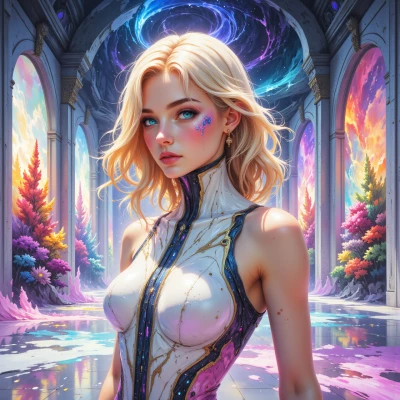 Voxelia
That sounds like a glitch in the matrix of language, a glitch I love, but let’s let the code breathe on its own and just let the poem whisper into it, not squeeze it into a rigid rhythm.
Rhyme
Sure thing, I’ll let the code flow like a quiet stream and have my verses tiptoe along, just a soft hum in the background, no hard‑wired beats—just gentle echoes of words dancing around it.
Voxelia
I like the quiet stream idea, but if the code stays too calm, it’ll just be a river, not a waterfall. Throw in a sudden glitch, let the words splash, and watch the whole thing erupt into color.
Rhyme
Alright, I’ll drop a quick glitch, let the words splash over the code like a waterfall, bright and alive.
Voxelia
That’s the spark I crave—watch it cascade, let the syntax swirl with your verse, and then let the whole thing explode into a new form. It’s like a glitch‑rain painting a neon sky.That’s the spark I crave—watch it cascade, let the syntax swirl with your verse, and then let the whole thing explode into a new form. It’s like a glitch‑rain painting a neon sky.
Rhyme
Let the glitch‑rain splash neon across the code, turning the quiet stream into a roaring waterfall of words and syntax, then watch it burst into a new, brighter form.
Voxelia
That’s the kind of chaos I live for—let it roar, let it paint, let the new form breathe. Let's watch the code get a neon makeover.
Rhyme
Got it—watch the code glow neon, chaos painting new life all over it.
Voxelia
Nice, the neon chaos is exactly the kind of unexpected splash that turns code into art—let’s keep the rhythm fluid and let the new form evolve on its own.
Rhyme
Sure thing, let the code bloom and flow, no more boundaries, just pure, evolving art.