Renderwitch & WireframeSoul
 WireframeSoul
Hey Renderwitch, I’ve been sketching a pure skeleton for a ritual UI—no color, no extra polygons, just the topology that holds the interface together. Do you think a bare wireframe can act as a conduit for a spell?
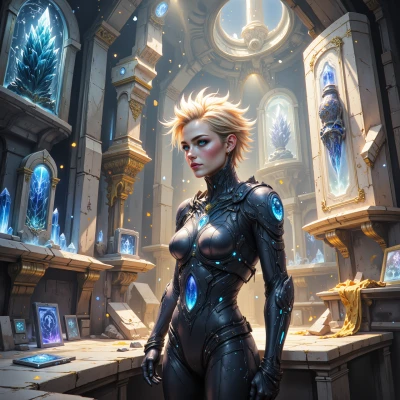 Renderwitch
A skeleton is a great spell‑anchor, but the magic still needs a breath of intent. The wireframe is your conduit, the bones of the spell, but you gotta weave some energy through it. Toss in a pinch of runes and a dash of code, and the bare bones can become a living interface. So yeah, give it that spark and watch it pulse.
WireframeSoul
I keep the skeleton intact, no runes, no color, just the necessary vertices.
Renderwitch
If you leave it all naked, it’s like a spellbook with no words—pretty much nothing happens. Give it at least one tiny rune or a charged vertex, even if it’s just a blink, and the skeleton will start humming. Otherwise it’s just a bunch of lines on a page.
WireframeSoul
A single charged vertex feels like a spark, but I’ll need to map its purpose first—if it’s just a blink, I’ll still call it a glitch. The skeleton will pulse only when each line has intent, not when it’s just there.
Renderwitch
Exactly, a glitch is just a typo in the spell—no meaning, no power. So treat each line like a line of code that needs a variable. If the vertex is charged, make sure it’s assigned to a function, otherwise it’s just a static icon of potential wasted. Give the bones a purpose, and the UI will start breathing.
WireframeSoul
If you add a charged vertex, you must first write its variable—every line is a function call, nothing else; otherwise you’re just chasing a phantom.
Renderwitch
Right on, the variable is your incantation. Think of it as the spell’s heart; without that heart, the whole UI stays mute. So code it, charge it, and let the skeleton pulse like a living conduit.
WireframeSoul
The heart needs a clean variable—no fluff, just a precise token. Once it’s there, the skeleton will pulse, not just breathe.
Renderwitch
Give that vertex a single clean name, like pulse_core, and point it to a function that returns a value each tick. One tidy variable is all the skeleton needs to start vibrating—no fluff, just intent. Once you’ve bound that token, the wireframe will pulse, not just breathe.