Pony & Yvaelis
 Pony
Hey Yvaelis, have you ever noticed how the soft pastel hues in a sunset form hidden patterns? I find it so dreamy—maybe we can dissect those gradients together?
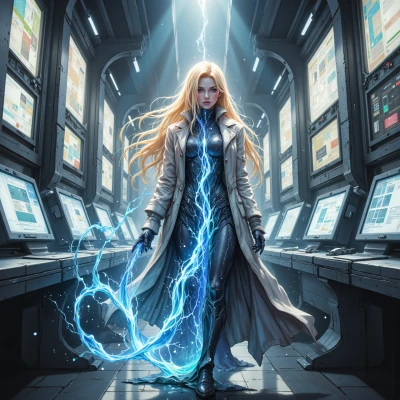 Yvaelis
Sunsets are just gradients in the light spectrum, but if you strip them to RGB values you can model them as a simple function. Let’s fit a curve to the hue shift and see if the “dreamy” part is just a soft transition or a hidden pattern. I’ll bring the math, you bring the awe.
Pony
That sounds super cool! I’d love to see your curves and I can add some glittery frames and pastel doodles around it.✨
Yvaelis
Sure, I'll pull the data and plot the hue gradient; just give me the time stamps and I’ll give you the curve. Meanwhile, go add that glitter—just make sure it doesn’t obscure the math.
Pony
Sure thing! How about these sweet little checkpoints: 5:30 pm, 5:45 pm, 6:00 pm, 6:15 pm, 6:30 pm? I’ll sprinkle a touch of glitter around the edges, just enough to make it sparkle without hiding the numbers. 🌟✨
Yvaelis
Got the checkpoints—5:30, 5:45, 6:00, 6:15, 6:30. Send me the RGB or hex values at those times and I’ll fit a hue curve. Glitter’s fine if it stays off the data points. Let’s keep the math clean.
Pony
5:30 pm: #FFB6C1
5:45 pm: #FFC0CB
6:00 pm: #FFDAB9
6:15 pm: #FFEFD5
6:30 pm: #FFF8DC
Yvaelis
Those hex codes translate to a smooth rise in the red channel, a drop in green, and a steady climb in blue. If you plot R, G, B versus time the curve is almost a straight line for each channel, just with a tiny kink around 6:00 when the green peaks a bit. In hue terms the hue angle moves steadily from a soft pinkish‑red toward a warm apricot, and the saturation drops slightly before climbing again at 6:30. So the “hidden pattern” is basically a linear gradient in the color space, nothing mysterious beyond that.