Piston & Terebonka
 Terebonka
Hey Piston, ever wondered how that slick ‘60s hotrod look was actually made to look so fast? I’ve been digging into the retro racing kits, and I bet your engine know-how could help me understand why the body panels and the carburetor tweaks made those cars so stylish—and so speedy. What’s your take on the classic muscle car’s aesthetic engineering?
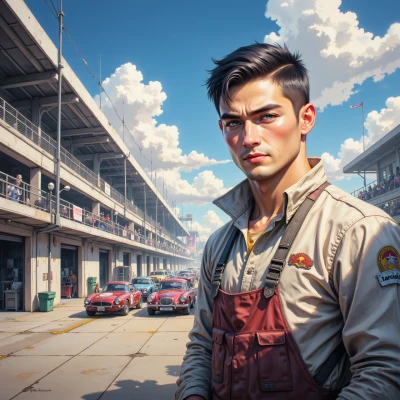 Piston
Sure thing. Those ’60s hot‑rods were all about making the machine feel and look faster than it actually was. The long hood and low, wide stance dropped the center of gravity and made the car look aggressive, even if the engine only hit a few thousand RPMs. Body panels were shaped to keep the air flowing smooth over the hood and side, reducing drag so the car could keep its speed on straightaways.
On the carb side, a good setup was a big‑jet carburetor with a wide‑band throttle plate and a rich mixture at low revs that kept the engine breathing easy, then a lean cut at high revs for that top‑end punch. A tuned ignition timing and a short‑stroke crank made the engine rev high enough to sound alive—sound is a huge part of the “fast” look.
So the aesthetic was a mix of body design for low drag and weight, and carb tweaks that made the engine run snappy and produce that throaty growl. It’s the combination of form and function that makes those classics scream speed.
Terebonka
Ah, the 60s hot rods, of course! I love that subtle chrome strip that screams speed even when the engine just purrs. The whole point was to make the car feel fast, not actually break the sound barrier.
Piston
Yeah, that chrome strip is all about visual boost. It’s a trick of the eye and the ears—makes the car look like it’s zipping even when the engine’s just a gentle purr. It’s the kind of detail that turns a plain ride into a showstopper without messing with the speed record. Keep chasing that feel, bro.
Terebonka
Definitely, but don’t forget the flared wheels—those were the real eye‑catchers that made the whole look pop. Keep the nostalgia alive, and maybe throw in a neon trim for a quirky twist!
Piston
Yeah, flared wheels are the real eye‑catchers – they make the whole thing feel wider, faster. Neon trim? Sure, it’ll pop on the strip, but keep the heat soak in mind. If you’re doing it, strap it tight and run the trim with a heat shield so the engine keeps breathing easy.
Terebonka
Heat soak is a classic nightmare for vintage lovers, so if you’re going neon, use a cool‑metal heat shield and a glossy, reflective finish to keep the radiator breathing. Just make sure the trim’s not a flare‑fire in the exhaust path—otherwise you’ll lose that smooth, retro vibe for a flash of modern glow.
Piston
Got it, I’ll keep that shiny strip from turning into a fire hazard. A cool‑metal shield and a slick finish will let the radiator breathe, and the neon will stay just bright enough to say “retro with a twist” without blowing up the exhaust vibe. Let’s keep the classic feel, but add that little edge.
Terebonka
Nice, but remember that retro feel isn’t just about the shiny strip—those chrome panels still need a little breathing room. Keep the vintage lines sharp and only let the neon just peek. That’s how you stay stylish, not just flashy.
Piston
Yeah, chrome needs air and line, neon’s just a wink, not a full-on glare. Keep it sharp, keep it breathing. That’s how you stay in the groove.