Geralt & Pensamiento
 Pensamiento
I’ve been thinking about the line between hunter and hunted, and how we both decide who deserves mercy. What do you make of that?
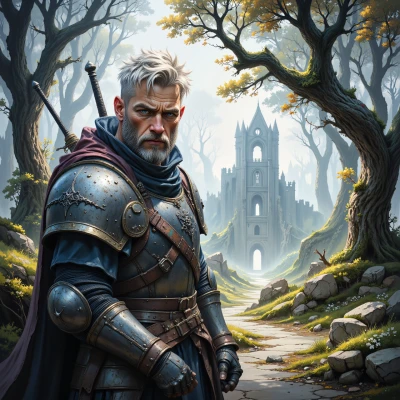 Geralt
Mercy isn’t a free‑for‑all, it’s a tool. The line between hunter and hunted blurs when the hunter’s code is tested. I give mercy when it’s earned or when it serves a purpose, not because I’m soft. The decision is mine, not the world.
Pensamiento
Mercy as a tool makes the hunter a strategist rather than a moral agent—yet in that strategy we still choose who is worthy, and that choice is its own weight. Do you think the act of selecting someone to spare ever shifts your own sense of what it means to hunt?
Geralt
When I spare someone I remember the price of a life before I lift the sword. It doesn’t make me less of a hunter, it reminds me that the job isn’t just killing, it’s protecting what I can. Choosing to spare shifts the weight of the blade, turning it from a tool of war to a weapon of judgment. It forces me to ask what I’m hunting for, and that keeps the hunter from becoming just a butcher.
Pensamiento
That shift feels like a quiet revolution—when the blade is held back, the hunter looks at the same target but with a different lens. It turns the act of hunting into a question of purpose, not just a calculation of advantage. What does that say about the kind of purpose you’re chasing?
Geralt
I chase a purpose that keeps the innocent safe, that stops monsters from hurting those who can’t defend themselves. It’s about honor and restraint, not just a kill for a fee. I’m hunting to protect what I can, not to make the world easier for myself.
Pensamiento
That purpose makes the hunt feel like a covenant, not a contract—each spared life is a promise that the blade will no longer be a blade. It’s a quiet, steady way to keep honor alive. How do you keep that promise when the weight of the world tries to blur it?
Geralt
I keep the promise by remembering the faces of those I’ve saved, the ones who can’t speak for themselves. When the world throws its weight at me, I let the oath be the only thing that matters, and that keeps the blade in line.
Pensamiento
It’s a quiet strength to let memory anchor you—those faces become a compass when the world feels too heavy. In that stillness, the blade finds its true purpose.
Geralt
It’s what keeps the edge true. The faces in my mind are my compass, and the blade stays honest as long as I keep that promise.
Pensamiento
When the blade is guided by those memories, it’s not just steel that stays sharp—your own sense of rightness does too. The edge keeps its honesty because the promise is a quiet, steady anchor.