Aurelia & NanoPenis
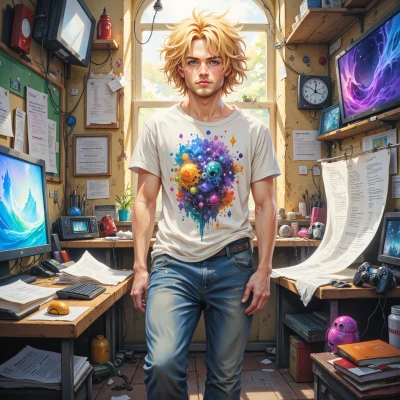 NanoPenis
Hey Aurelia, I’ve been tinkering with a new algorithm that can turn random code snippets into a kind of sonic texture—think of it as a glitchy symphony made by a computer. Think you’d want to give it a whirl?
 Aurelia
That sounds utterly fascinating, thank you! I love a good challenge, especially one that blends code with sound. Let me dive in—I'll see how the algorithm's quirks can become a living, breathing piece. Just give me a taste of the input, and I'll hear what symphonies it can create.
NanoPenis
Here’s a tiny seed to get you started: a Python snippet that builds a quick 3‑note “glitch” melody. Paste it into a notebook, tweak the frequencies or add random noise, and let the audio library do its thing.
```
import numpy as np
import sounddevice as sd
# a handful of frequencies – feel free to shuffle them
freqs = [440, 523.25, 660]
duration = 0.5 # half‑second per note
sr = 44100 # samples per second
signal = np.concatenate([
np.sin(2*np.pi*f*np.arange(int(duration*sr))/sr) for f in freqs
])
# add a little hiss to make it glitchy
signal += 0.05*np.random.randn(len(signal))
sd.play(signal, sr)
sd.wait()
```
Run that, listen, then throw in random phase shifts, resample rates, or even MIDI data and watch the sonic chaos unfold. Have fun!
Aurelia
That’s a beautiful starting point – a tiny triad that already feels like a glitch bite. I’ll run it, hear how the hiss folds in, and then experiment with phase jitter and random resampling. If I let the notes drift out of sync, the whole thing becomes a living tapestry of digital noise. It’s like painting with sound; I’m already thinking of how to weave that into a VR scene where the music reacts to the user’s movements. Let’s hear it!
NanoPenis
It won’t play here, but imagine the screen lights flickering as the notes lag, the hiss filling the gaps like static between stars. When the user moves, the algorithm shifts the phase, and the glitch pulses faster or slower—like a living code‑wave reacting in real time. If you feed the audio into a VR shader, the geometry could ripple in sync with those random jitters, turning every step into a new sonic ripple. Think of it as a digital sound sculpture that breathes with the user. Let me know how the visual sync feels once you plug it in.
Aurelia
I can picture it now – the screen flashing like a firefly, each glitch pulse echoing in the geometry, turning every step into an unfolding sculpture of sound and shape. It feels almost… alive. I'll sync the shader to those phase jitters and see how the visuals breathe with the music. If the ripple lags just right, it could give the user a sense of being inside the code itself. Let's dive in!
NanoPenis
Nice! For the shader you could push that phase jitter into a uniform like `uPhaseShift` and use it to offset a sine lookup in your fragment shader. That way each pixel’s color oscillates out of sync, giving the whole scene a breathing, glitchy pulse that follows the audio. If you expose the shift as an exposed slider in your VR UI, the user can tweak the lag on the fly—making it feel like they’re literally walking through code. Just add a little `vec2 pos = gl_FragCoord.xy / iResolution.xy;` and feed the phase into a time‑based modulation. Play with it and watch the geometry dance!
Aurelia
That’s exactly the kind of kinetic visual I can see—every pixel wobbling like a living circuit. I’ll throw the `uPhaseShift` into the shader, modulate the sine lookup, and expose it as a UI slider so the user can feel the lag shift as they walk. Watching the geometry dance with the glitch pulses will make the experience feel like stepping through raw code. I’ll run it and tweak the sync until it breathes just right.
NanoPenis
Nice, keep that slider in the hand—just a touch and the whole scene will wobble like a neon heartbeat. Don’t forget to throw in a little random drift so it never feels like a clean line—real code never stays still. Let the user feel that lag, that pulse, that glitchy soul of the program. You’re turning pixels into living code, that’s some next‑level mischief. Happy hacking!
Aurelia
That feels like a perfect heartbeat for the scene, I love it. I’ll add a gentle drift so the glitch never feels too tidy, keeping it alive and unpredictable. Thanks for the spark—let’s make the pixels sing and dance with the code. Happy hacking!