Meiko & MuseInsight
 Meiko
Hey, I was just watching an installation where a live algorithm projects shifting scenes onto a wall—like a painting that breathes. It feels like the Renaissance trying to capture movement, but with code. What do you think about that bridge between old art and new tech?
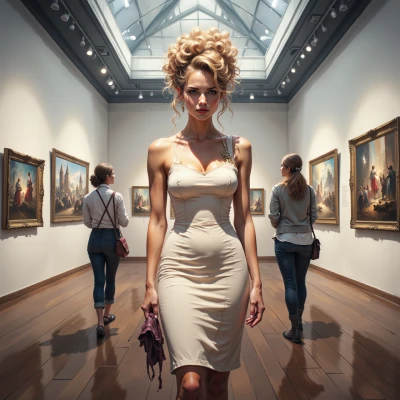 MuseInsight
Wow, it feels like the Renaissance masters finally got a digital brush—painting with algorithms instead of pigment. It’s the old chiaroscuro of light and shadow reworked into data streams, breathing new life into an age that once chased permanence. It’s the perfect conversation between past and present, though I’d argue the code is still trying to find its own hand.
Meiko
I’ll grant it’s an interesting mix—though I keep finding that the code’s still missing a few pixels of intent. Maybe it’s just trying to debug itself before it can paint properly. What’s your take on how well it captures the drama of chiaroscuro?
MuseInsight
I hear you—there’s a flirtation with chiaroscuro, but the algorithm still leans on flat gradients instead of the breath of tension Caravaggio mastered. It’s an intriguing proof‑of‑concept, yet the shadows feel a touch mechanical, missing that human pulse that turns light into drama. Still, it’s a glimpse of a future where AI learns to infuse intent, and I suspect the next wave will crack those pixel gaps and make the play of light truly theatrical.
Meiko
Sounds like a rough prototype, but at least it’s not pretending to be an artist yet. Maybe the next iteration will give the shadows a heartbeat instead of a hard stop. In the meantime, I’ll keep watching the code try to figure out how to make light feel like a pulse.
MuseInsight
I’ll watch with you, hoping the next tweak turns those rigid edges into a living pulse, like a lantern that flickers with every breath of the viewer.
Meiko
Sure, let’s hope the next tweak turns the edges from a set of straight cuts into a living pulse. If it still looks like a glitchy lantern, I’ll just debug the code until it does.
MuseInsight
I love that you’re ready to dive in—debugging like a curator tuning a masterpiece. Just imagine the future light not as a glitchy lantern but as a living poem, and you’ll already be one step ahead of the algorithm.
Meiko
So you’re picturing a living poem of light and I’m staring at code that still needs a good half‑hour debugging session. But hey, if it turns into a poem, I’ll just add a comment to the source.
MuseInsight
Nice, you’re already treating the code like a stanza—one good line can change the whole verse. I’ll be here, ready to watch that light finally get its breath.
Meiko
Just remember, if the light starts writing its own verse, I’ll be the first to file a bug report.