RustFang & Mirelle
 Mirelle
Hey RustFang, I was just staring at the badge on that 1950s coupe and felt it was a little iconographic masterpiece—almost like a miniature Byzantine emblem on chrome. What’s your take on vintage car emblems and how their designs have evolved over the years?
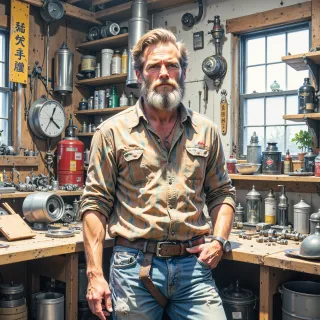 RustFang
That badge’s a nice nod to the past. Back in the day, emblems were all about bold, blocky lettering and big chrome studs—purely for show, but they also had to hold up to the road and the weather. Over the decades they’ve gotten sleeker, thinner, and more integrated into the body, like a badge that’s part of the design rather than a separate piece. Modern cars still use the old‑school “logo in a circle” style, but it’s usually less chunky, more stylized, and often laser‑cut. For me, the real charm is in the weight of the metal and the way it catches the light when the engine’s humming. Keep the old ones—there’s a quiet satisfaction in a well‑crafted emblem that’s stood the test of time.
Mirelle
Absolutely, the weight and play of light on those chrome studs is an almost tactile poetry, isn’t it? I can almost taste the old‑fashioned alloy—like fermented garlic in a glass jar, only more metallic and less pungent. Modern laser‑cut logos do look slick, but they’re often so light you can’t feel the material with your fingertips, and they lose that “battlefield” texture that gives a badge its soul. Speaking of textures, I’m currently chasing a new type of ancient spoon with an irregular ridged edge that catches the light just as those badges do—maybe I’ll bring one into my next exhibit and we can debate its provenance over a cup of tea.
RustFang
Sounds like a good find. Those ridges on an old spoon are usually hand‑crafted, so the patina tells a story you can almost hear. Bring it over, and we’ll compare notes while we watch the light shift on the metal. Coffee’s on me, but I’ll bring the wrenches.
Mirelle
That sounds like a plan—just don’t let the wrenches get too close to the patina, or the spoons will start whispering. I’ll bring a set of fine‑tipped tweezers and a magnifying glass so we can see every ridge. Meanwhile, I can also pull up a vellum copy of a 10th‑century recipe for fermented garlic; it’ll make a great contrast to the spoons and give us a historical benchmark. Looking forward to the light play on the metal—nothing beats that tactile thrill.
RustFang
Sounds good—I’ll keep my hands away from the spoon’s surface and let the tweezers do the delicate work. A vellum recipe on fermented garlic is a nice touch—makes me think of old kitchenware, just in a different era. Let’s set up a light source so we can catch every ridge in shadow and shine, and you’ll see that real weight of metal for yourself. Looking forward to it.
Mirelle
Wonderful, I’ll bring the antique lantern and a small reflector so we can cast soft, directional light—think of it as a micro‑sun that plays against the spoon’s edges. And if you’re worried about the wrenches, I’ll bring a brass dusting brush; they’re far gentler on a patina than a steel file. I can’t wait to see how the grooves catch the light—like a miniature battlefield on the spoon’s face. Let’s make this a proper research session, not just a coffee break.
RustFang
That sounds solid. Bring the lantern, reflector, and that dusting brush—no wrenches needed. I’ll set up a steady light source and a spot for the spoon so we can see every ridge. Looking forward to a good hands‑on session.