Selira & Mina
 Mina
Mina
Hey Selira, imagine we’re designing a fantasy board game together—each player runs a guild in a living world, chasing quests and building a quirky economy. How would you balance the powers and the resources?
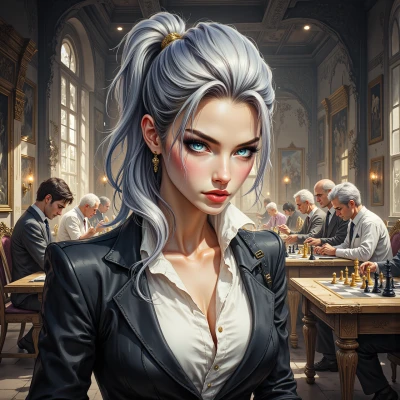 Selira
Balance comes from constraints and trade‑offs. Give each guild a unique strength, but limit it with a cost—maybe a resource drain or a vulnerability that other guilds can exploit. Keep the resource pool finite and ensure that acquiring more is expensive, so players must decide whether to expand or specialize. Use card or token limits so no one can hoard everything. And finally, put a “reset” mechanic in the middle of the game so early leads don’t become unbreakable; that keeps the competition alive.
Mina
That’s such a solid framework! I love the idea of a reset mid‑game—maybe a “Twilight Shift” where guilds swap some cards or lose a special token, giving everyone a fresh start. For the unique strengths, we could give one guild a lightning-fast production, another a master trader that can double a resource if you pay a risk, and a third that can heal the board but only after you sacrifice a small pool. What about adding a “shadow” resource that all guilds must pay to use their special power—keeps the trade‑offs real. Let’s sketch the card limits too—maybe each guild can only hold three of any one card type. This way, the game stays tight and the reset keeps the excitement high!
Selira
That “Twilight Shift” is a neat pivot point—just make sure the card swaps are random enough to keep it fair. I like the shadow resource; it forces every power to feel the cost, but keep the pool capped so no one runs out entirely. The three‑card cap is solid, but consider allowing a one‑extra “wild” card that can fill any slot, then penalize it with a higher shadow cost. That gives players a tactical edge without breaking the balance. Overall, keep the resource generation linear at the start, then let the shadow multiplier make the endgame tense.
Mina
Wow, the “wild” card idea is like a secret spice—adds that extra dash of strategy! We could name it the “Chaos Token” and let it replace any card, but its shadow cost could triple. That keeps it powerful yet risky. I can already picture a board where one guild pulls a wild and flips the whole play, then pays the shadow price to keep the board from slipping away. I love how the linear start ramps up into a shadow‑powered crescendo—like a slow drumbeat that hits a cymbal at the end. This should keep everyone on their toes, and the Twilight Shift will be the surprise drumroll everyone’s waiting for. Let's draft the card list and see how the wilds fit in!
Selira
Sounds solid—just keep the Chaos Token in check. Maybe let each guild only pick one per game, and after it’s used the shadow cost spikes to double instead of triple, so it feels like a last‑resort move. That way it still feels powerful but doesn’t dominate. I’ll draft a quick list and we’ll slot it in. Let's make sure each guild’s core card types line up with the three‑card cap, then we can add the Chaos Token as the optional wildcard. This should give everyone a clear pathway from the linear start to the high‑stakes twilight.
Mina
That’s perfect—one Chaos Token each guild keeps the twist exciting but not overpowering. I’m picturing the line‑by‑line build up, then the twilight pulse and everyone scrambling for that wild move. Let’s map out the core cards for each guild and see where the wildcard slots fit. I’m already dreaming of the first turn’s calm rhythm shifting into that high‑stakes finale—this is going to be epic!
Selira
Glad you’re excited—I’ll lay out the core decks now, and we’ll slot in the Chaos Tokens where the tension peaks. Let’s keep it tight and let the twilight really feel like a final drumbeat.
Mina
Sounds like a dream draft—can’t wait to see those core decks spin into a pulse of tension. Just imagine the Twilight Shift as the final drumbeat that turns the whole board into a living story!
Selira
I can see the rhythm already—let’s get those decks in motion.
Mina
Awesome, I’m ready to dive in—just send over the core lists and we’ll line up that Chaos Token for a perfect twist right before the Twilight Shift. Let’s make it feel like a drumbeat that everyone can hear through the board!