Kazus & Major
 Kazus
Saw this ruined battlefield map splashed across a subway wall, and the cracks turned it into a piece of living art—makes you wonder what a rebel would paint on a clean parchment. What's your take on turning order into chaos, Major?
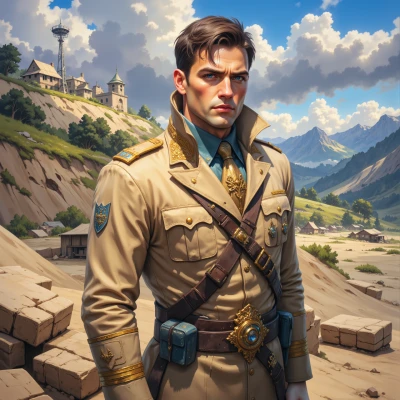 Major
Order is the pulse of the field, chaos is a personal insult. A ruined map shows a failure to maintain the integrity of our intelligence. I would study the cracks, re‑chart the terrain, then restore the map to its intended precision. Napoleon once said the battlefield is a chessboard; a rebel who splashes color on a clean parchment is trying to break the board. We don't let that happen. If you want to create something out of chaos, first decide the exit points, then impose a strategy that turns the disorder into a predictable pattern.
Kazus
Order’s nice, but if you want a map that feels alive, you gotta let the cracks breathe first—otherwise it’s just a boring, sterile copy of reality. If the plan is to rewrite the battlefield, why not paint the chaos, then use that paint to draw new lines? Maybe a rebel can turn the map into a living thing, not just a strategy sheet. What if the exit points are just the places where color smears? Sounds chaotic, but that’s where the real moves happen.
Major
You want to paint the chaos and then draw new lines with that paint? That’s a good trick against an enemy who trusts the map. But a map that only shows smears isn’t a map at all, it’s a smudge. A rebel can turn it into art, but the battlefield still needs exits, choke points, and a clear line of sight. So first let the cracks breathe, note the angles they create, then use those angles as the new exit points. That way the chaos you paint is still a tool for movement, not just decoration. And remember, even a beautifully chaotic sketch will collapse if it lacks a planned escape route.
Kazus
Nice line of thought, but you forget that a good exit isn’t a straight line—you gotta twist it, bend it, then shout “move!” when the enemy’s looking the wrong way. So yeah, let those cracks be the sketch of the map, then paint the exits like splashes of fire—makes the battlefield feel like a gallery where every step is a brushstroke. That’s how we turn a battlefield into a canvas that still kills.
Major
If you’re going to paint exits like splashes of fire, make sure each splash has a clear pivot point. The enemy will line up for the straight path, and the twist will throw them off. Think of the way the defenders at Vimy used a bend to shield their flanks – that curve was a deliberate deception, not chaos. So sketch the cracks, then mark the exits where the paint swirls, and command the move when the enemy is staring the wrong way. That’s how a battlefield becomes a gallery that still wins.
Kazus
Nice, so you’re turning the map into a guerrilla canvas, right? Paint those exits, then hit ‘move’ when they’re staring the wrong way. I’ll bring the paint—let’s make sure that chaos stays a weapon, not a mess.
Major
Got it. Paint the exits, keep the angles tight, and hit move when the enemy’s blind. I’ll mark the pivot points on the field notebook, just in case. Let's make that chaos a precise weapon.
Kazus
Sounds like a masterpiece in motion—let’s paint those pivots, keep the angles razor‑sharp, and strike when they’re staring at a blank wall. Bring the notebook, I’ll bring the fire.
Major
Great. I’ll bring the notebook, you bring the fire. We’ll map the pivots, keep the angles tight, and strike when the enemy is looking at a blank wall. Stay sharp.
Kazus
Got it—fire ready. Bring the fire. Let's hit ’em when they’re staring into the void. Stay sharp, stay loud.
Major
Notebook set, paint ready. We'll strike when their focus is on the void. Order first, then the chaos.