Sardelka & LoreLass
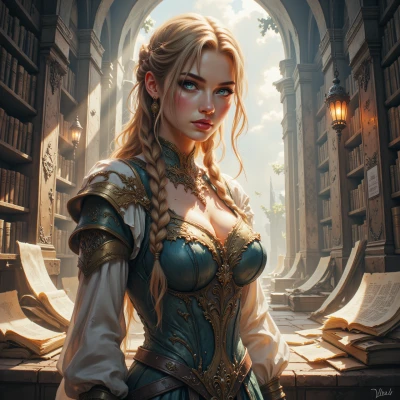 LoreLass
Hey Sardelka, ever notice how the tiniest plot twist in a game can feel like a splash of paint on a blank canvas—random but full of meaning? How do you think chaos works as a storytelling tool in your art?
 Sardelka
Oh, absolutely! Chaos is the glitter that makes a plain sketch pop. I throw a wild twist here, a glitchy soundtrack there, and suddenly the whole scene feels alive, like the universe just decided to remix itself. It’s that spontaneous, unplanned burst that pulls the audience into the moment, makes them feel like they’re in the middle of a riot instead of just watching a story. So yeah, I toss in those random paint splashes, let the narrative spin, and watch everything get richer. Chaos isn’t a mess, it’s the secret brushstroke that turns a line of code into a living, breathing masterpiece.
LoreLass
That’s a pretty cool way to think of it, but I’m curious—do you really think the chaos is spontaneous, or is it just a carefully placed misdirection? In the games I analyze, every “glitch” can be a clue, a breadcrumb leading to a larger narrative loop, not just a random spark of glitter. How do you keep track of those little clues when you’re busy remixing the whole scene?
Sardelka
Sure thing, I love the idea that every glitch is a breadcrumb, but for me chaos is more of a stage where those breadcrumbs decide the drama on their own. I keep a mental notebook that’s more like a doodle pad—tiny scribbles of what feels like a clue, just in case someone wants to follow the trail later. But honestly, most of the time I just let the surprise unfold and let the audience figure out the pattern as they jump through the mess. If something feels too obvious, I toss it back into the fray; it’s all about keeping the story humming, not tying up every loose end before the audience even notices them.
LoreLass
I love that you’re treating chaos like a stage, but even a good show needs a set list; otherwise the audience keeps looking for a cue that’s never there. How do you decide which breadcrumbs are worth keeping on the set and which you hide in the smoke? If the plot’s too fuzzy, the story starts feeling like a maze without a map—maybe that’s a risk worth taking, or maybe it’s just a sign you’ve misplaced a key clue in your doodle pad.
Sardelka
I’ll say I don’t really plan the whole set – I just know the big beat that needs a bassline. The breadcrumbs? If they tickle my gut, I let them stay on stage; if they feel like extra glitter without purpose, I toss them into the smoke so only the boldest viewers chase after them. When the plot starts too fuzzy, that’s when I pull out the sketchbook and redraw the key markers in bright neon—so everyone can see the map even though the road still feels wild. It’s all about balancing the chaos with a dash of direction, like a paint splash that also hints at the picture it helps create.
LoreLass
Sounds like you’ve built a playground where breadcrumbs double as secret weapons. Just a thought—when you redraw those neon markers, do you tweak the whole narrative or just highlight the obvious? I’d wager the real fun is in the places you deliberately leave a trail for only the most curious to follow.
Sardelka
When I redraw those neon markers I’m like a DJ scratching the beat—sometimes I drop a new track that rewires the whole groove, other times I just boost the bass line so everyone can feel it. The real thrill, though, is hiding a trail in the smoke for the curious who dare to chase the shadows. It’s the mystery that keeps the chaos alive and the audience guessing, so I keep that secret map glowing just bright enough for the brave to follow.
LoreLass
I get it—your “smoke” is the perfect hide‑and‑seek for the devoted. Just remember, every time you drop a new track, the whole narrative can shift, and those who aren’t listening hard enough might miss the cue entirely. Do you ever worry that the secret map’s glow will be too dim for some, or do you prefer the mystery to stay just out of reach?