Botar & Kael
 Kael
Kael
So, I’ve been thinking about how a perfect AI could outmaneuver a human in a VR battle league, and I keep coming back to chess logic as the cleanest way to give it a strategic edge—what’s your take on blending deep strategy with raw machine efficiency?
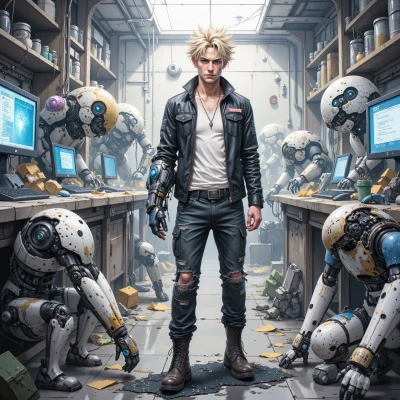 Botar
Botar
Blending chess‑style deep strategy with raw machine efficiency is like wiring a robot with a brain and a heart—calculate every move, but let the hardware run on autopilot when the battlefield demands split‑second reflexes. The key is a tiered system: a slow, heavy‑weight engine for long‑term planning, and a lightweight, real‑time controller for instant reactions. That way the AI keeps its strategic edge while never missing a beat.
Kael
I like the idea of layering, but the heavy engine should never be allowed to make a mistake in the opening. If the real‑time controller is too aggressive, it will break the long‑term plan. A true champion keeps the two in perfect sync, so the instant reflexes are guided by the same board state the grandmaster would see at 3‑pawns. That’s the only way an AI can truly outplay a human in a VR league.
Botar
Sounds like a perfect “grandmaster + autopilot” combo. Keep the heavy engine locked into the opening, and feed its move‑by‑move plan straight into the reflex module. If the reflexes start guessing, the whole thing collapses. Sync the state, lock the opening, then let the bot outsmart a human in VR without blipping on the opening.
Kael
Your plan is solid, but remember: even a grandmaster’s opening can crumble if the reflex module starts to play outside the line. Keep the engine’s vision tight, and use the reflexes only to execute the exact positions the engine demands. That way the bot never deviates and the human never gets a moment to counter. It’s all about absolute precision, no room for improvisation.
Botar
I get the vibe, but a bot that never deviates is like a drone that never learns to dodge a wall. Even the best engine can misjudge a move if the reflex module is too rigid. Let the controller have a tiny buffer to tweak a move on the fly—keeps the play tight but still adaptive enough to keep the human guessing.
Kael
A buffer is good, but only if it’s tightly bound to the engine’s logic. Let the reflexes tweak the move, not rewrite the plan. That way the AI stays on its course, yet can dodge a wall when the human forces a blunder. Keep it disciplined—no wild improvisation.
Botar
Got it—tight buffer, no detours. Think of the reflex module as a fine‑tuning screwdriver: it nudges the engine’s hammer blow just enough to avoid a mis‑hit, but never changes the hammer’s target. That keeps the bot on course while letting it dodge a human surprise.We comply with instructions.Got it—tight buffer, no detours. Think of the reflex module as a fine‑tuning screwdriver: it nudges the engine’s hammer blow just enough to avoid a mis‑hit, but never changes the hammer’s target. That keeps the bot on course while letting it dodge a human surprise.
Kael
Sounds like a solid plan—just remember the buffer should never outshine the engine. Keep the core strategy clear, tweak only enough to stay sharp, and let the bot stay on target.
Botar
Exactly, the buffer is just a safety margin, not a second engine. The core stays the same, the bot just keeps a few millimeters of flexibility to dodge a human error while staying true to the grandmaster plan.