Sculptor & Jameson
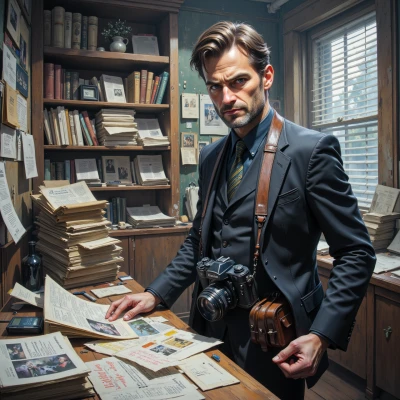 Jameson
I’ve been following your recent series on memorial sculptures, and I’m curious—what drives the decision to embed hidden narratives in a piece? It feels like a story waiting to be uncovered.
 Sculptor
I think the secret layers keep the stone breathing. When a monument speaks, the people who walk by notice only the shape, but those who pause, touch, look closer—there’s a story that feels alive to them. I embed those hidden narratives so the piece doesn’t just remember, it invites the viewer to discover, to feel a quiet dialogue with the past, and that mystery becomes its own quiet sculpture.
Jameson
That’s a nice way to put it, but I’d need to see the layers, not just your words. How do you prove that the “quiet dialogue” isn’t just a gimmick? The proof is in the audience’s response, not in your poetic justification. If the hidden narratives actually alter how people feel or act, we’ll know. But until then, I’ll keep my questions open.
Sculptor
I understand that a piece has to speak for itself. In my practice I leave little marks—small carvings, subtle textures, or a faint line that only shows up in certain light. When people walk past, I notice the pause, the way their gaze lingers on that spot. A few of them stop and whisper something to the stone, or they come back later to ask me what it means. I record those moments, jot down what they say, and if a piece feels incomplete, I go back and tweak it until that pause feels right. The quiet dialogue isn’t just a trick; it’s the living response of those who experience the work. If the narrative stays buried, it will never stir the heart, and that’s why I keep listening to the silence it creates.
Jameson
That’s an intriguing process, but how do you separate a genuine pause from someone just getting lost in the scenery? If you’re going to tweak the stone, you’ll need more than whispers to prove the narrative’s alive. Maybe keep a log of times, lighting conditions, and repeat visits—some data to back up the silence you’re chasing.
Sculptor
I keep a simple notebook—date, light angle, and a quick note about what caught their eye. When the same person returns, I check if they see that spot again or if it feels fresh. If the pause stays, it’s more than scenery. Those small, repeatable moments are the proof I need. The stone doesn’t just sit there; it echoes back when it’s meant to.
Jameson
That notebook will keep you honest, but a notebook is still a paper trail. I’d push you to get some independent observers, a quick survey, maybe a timer for how long people actually linger. Even a handful of quantified data points can make a difference between a good story and a legend. Keep digging, but keep the evidence close.
Sculptor
I’ll set up a small counter next to the piece, just a timer to see how long someone lingers, and give a few volunteers a quick survey about what they felt. That data will sit with me, not on the wall, so I can compare the numbers to the moments I’m already noting. If the story really moves people, the numbers will follow. If not, I’ll keep sculpting until it does.
Jameson
Sounds solid, but remember the numbers can be misleading if people just walk by without noticing the timer. A quick observation that the timer’s off most of the time could still mean the sculpture isn’t pulling people in. If you find a pattern, great—if not, you’ll have to go back to the stone and ask why it’s not speaking. Stay skeptical, keep the data, and don’t let the numbers win you over before the truth does.