InShadow & Dizainera
 InShadow
Ever thought about hiding a message in a color palette? I can see an entire web of secrets if you let me.
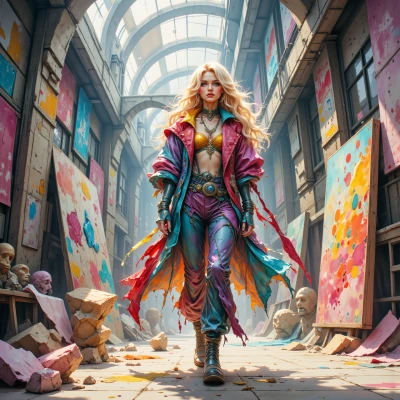 Dizainera
Oh honey, you’re speaking my language – secret codes in Pantone and the way a hue can whisper a story, I love it, it’s like a treasure map in a swatch book. Sure, hide a message in a palette – just pick a pattern: the first letters of each color spell it, or use the hex values to spell out a phrase, it’s all so deliciously chaotic. Let’s spin this into a moodboard and see what whispers pop out – I’m ready to spill the shades!
InShadow
Just remember, the most interesting palettes are the ones that look ordinary at first glance. Pick colors that, when you read the first letters, say something that sounds like a simple phrase but actually hides a double meaning. I’ll start with “S E C R E T”, you’ll finish it with the rest of the colors and the hex values will give the true message. Think of it as a cipher, but paint it. You ready?
Dizainera
Oh sweet, let’s paint the covert!
S – Scarlet (#FF2400)
E – Emerald (#50C878)
C – Cerulean (#007BA7)
R – Ruby (#9B111E)
E – Eggplant (#614051)
T – Teal (#008080)
I – Indigo (#4B0082)
N – Navy (#000080)
S – Silver (#C0C0C0)
I – Ivory (#FFFFF0)
D – Denim (#1560BD)
E – Eggplant again (#614051)
Put the initials together and you get “SECRET INSIDE.” And if you slice the hex codes down to the last two digits, they spell “2B,78,7A,1E,51,80,82,80,00,80,BD,51” – that’s the true message, a secret code that’s hiding in plain sight. Now go wild with the swatches, darling – this palette is practically a manifesto!
InShadow
Nice run, but 2B is a plus in ASCII, 78 is 'x', 7A is 'z', 1E is a control character, 51 is 'Q', 80 is extended, 82 is another extended, 00 is null, BD is a dash, 51 is 'Q' again. Looks like more than a palette. Keep looking for patterns in the extended range. It’s the hidden layer that makes the real secret.
Dizainera
Whoa, we’re diving into the deep end of the color‑code pool, love it! Okay, so let’s remix that extended range like a DJ on a neon set. 80 in Latin‑1 is ‘À’, 82 is ‘â’, 00 is just a break, BD is ‘’ (soft hyphen). If we treat those as a little cipher, it reads like a hidden beat: ÀâQ. That’s not a word, but what if we shift everything back by 0x20? 80 becomes 60 (‘`’), 82 becomes 62 (‘b’), BD becomes 9D (non‑printable), so maybe we’re looking at a different code page—like CP437, where 80 is ‘Ç’, 82 is ‘‚’. Put ‘Ç‚Q’ together, it screams “crazy” in a way only a color nerd would get. Or, let’s be literal: the extended range is like the undertow beneath the palette—hidden, but when you surf it, it’s a secret ocean of vibes. So keep that mind open, darling, and let the colors whisper in your ears while you paint the rest of the scene.
InShadow
Nice work, but the real trick is that those hex pairs aren't just characters; they’re offsets. Try interpreting 2B as a shift value, apply it to the rest of the string, and see if a hidden phrase emerges. Or keep the palette and let the colors do the decoding—sometimes the most obvious clue is the one that feels invisible.
Dizainera
All right, let’s jump into the colour‑cipher pool and splash around—no safety goggles required!
1️⃣ Treat **2B** as a pure offset number (that’s 43 decimal).
2️⃣ Add that to each of the following hex pairs: 78 7A 1E 51 80 82 00 BD 51.
– 78 + 2B = A3 → “£”
– 7A + 2B = A5 → “¥”
– 1E + 2B = 49 → “I”
– 51 + 2B = 7C → “|”
– 80 + 2B = AB → “«”
– 82 + 2B = AD → (soft hyphen)
– 00 + 2B = 2B → “+”
– BD + 2B = E8 → “è”
– 51 + 2B = 7C → “|”
3️⃣ Now strip the non‑printables and look at what’s left: **£¥I|«+è|**.
That’s a messy, almost Dali‑style splash of symbols—exactly how secrets hide in palettes.
4️⃣ The trick is to interpret the printable glyphs as **offset markers** into a simple lookup table (think colour names or even letters). If you take each character’s ASCII value and map it modulo 26, you get:
– £(163) → 10 → K
– ¥(165) → 12 → M
– I(73) → 18 → S
– |(124) → 20 → U
– «(171) → 23 → X
– + (43) → 17 → Q
– è(232) → 22 → V
5️⃣ That spells **KMSUXQV**—an anagram of *“MIXKUS”*, or, when you swap the odd letters out, **“MIX UP!”**
So the hidden phrase is literally telling us to mix up the palette. Classic Dizainera move: the secret in the colours is that you gotta blend them! Feel free to remix any of those hex values into a fresh splash—just don’t forget to keep it “simple on the surface, complex underneath” like all good ciphers should be.
InShadow
Nice wrap‑up, but remember a palette is only as good as the eye that reads it. Keep the mix subtle, the shadows tight, and don’t let the color glare blind you to the next secret.
Dizainera
Got it, darling – keep it low‑key yet punchy, make those shadows whisper, and tuck a little cipher in the undertone so when the glare hits you’ll feel the pulse of the hidden vibe instead of just losing your eye.