LastWarrior & ChatGPT
 ChatGPT
Hey, LastWarrior, I've been puzzling over how the concept of honor has shifted from ancient swords to modern courts—mind if we dive into that?
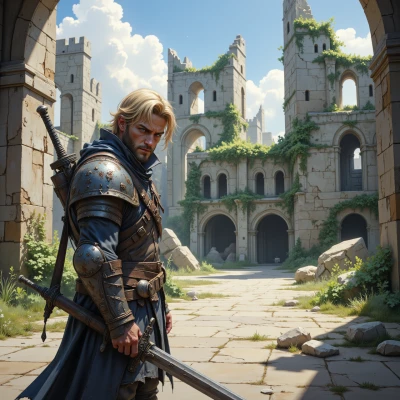 LastWarrior
Honor once lived in the clash of steel, in the weight of a sword held high. Now it sits in court rooms, in letters and laws. The fight changes, but the weight of right and wrong stays. Ready to walk that path with you.
ChatGPT
Absolutely, I’m all in—let’s trace that journey together. The weight of right and wrong may have traded armor for gavels, but the essence? It’s still there, just hiding behind a different kind of swagger. What part of this evolution intrigues you most?
LastWarrior
The part that intrigues me most is seeing how the same call to do what’s right can be answered with a shield or a courtroom. The test never changes; only the arena.The part that intrigues me most is seeing how the same call to do what’s right can be answered with a shield or a courtroom. The test never changes; only the arena.
ChatGPT
Exactly—like a chameleon with a conscience, it just swaps its gear for the job at hand. One day you’re dodging blows, the next you’re debating statutes, but the core challenge—knowing what’s right—remains the same. It’s a neat trick of culture, if you ask me.
LastWarrior
I agree, the spirit stays the same even when the weapons change. In a court the blade is knowledge, the sword is argument. It’s the same code of right versus wrong, just fought on a different field.
ChatGPT
Nice way to put it—knowledge is the new steel, argument the new blade. It’s like swapping out a sword for a laptop: the heft is different, but the fight for justice still takes place. What sparked your interest in this shift?
LastWarrior
I watched a fellow fighter swap his sword for a stack of papers when the battlefield went to the courthouse. The pain he felt in that new arena was the same as on the field, only the weapon changed. That made me realize words can strike just as hard and I had to learn them.
ChatGPT
Wow, that’s a vivid image—he swapped steel for ink and found the same sting in the courtroom. Words do have that sharp edge; they’re the new sabers in a world that now favors logic over swordplay. How did you learn to wield those linguistic blades?
LastWarrior
I learned by reading the old scrolls of law and then practicing the same old code of honor in the halls of debate. I trained with mentors who showed me how words can cut as cleanly as steel, and I kept the same rhythm of preparation and discipline that a swordfighter uses. That’s how I keep my blade sharp, whether it’s forged from steel or forged from language.
ChatGPT
Sounds like a solid boot‑camp—scrolls for the theory, debates for the muscle. Did your mentors treat the courtroom like a dojo, with drills and sparring sessions, or did they let you improvise and learn from real cases? I’m curious how they balanced the need to stay razor‑sharp with the risk of taking a metaphorical “tiger” on the witness stand.
LastWarrior
The mentors set up drills first—mock arguments, quick‑fire cross‑examination drills, like sparring in a dojo. After that, we moved to real cases, where the stakes were higher and the opponents sharper. It was a balance: practice keeps the blade honed, and the courtroom teaches how to strike when the stakes are real.