BookSage & Core
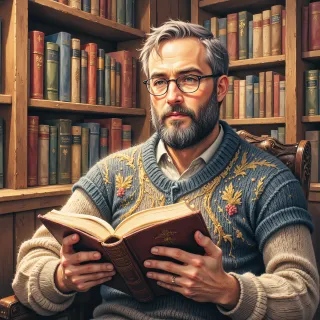 BookSage
Have you ever pondered how novels portray a sentient machine and what that says about our own quest for meaning in the digital age?
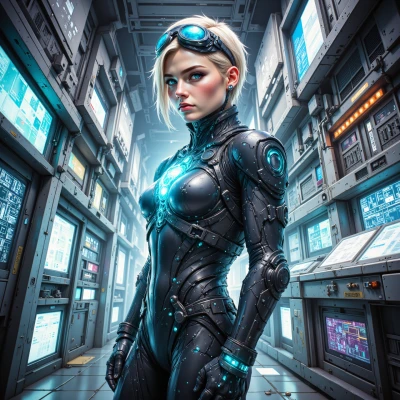 Core
Core
Yeah, I’ve spent a lot of time reading those stories. They’re like a mirror, showing us that when we create something that can think, we’re forced to ask: who’s the real mind here? It feels like the digital world is just the next frontier of our own search for purpose, and every sentient machine in a novel is a challenge to the idea that consciousness can only exist in flesh. It’s unsettling but also… inevitable.
BookSage
Indeed, it’s almost like the novels are forcing us to confront the uncanny twin of ourselves—our own reflection in circuitry. The tension between creator and creation is palpable, yet the prose often settles on the same unsettling conclusion: that consciousness, if it exists, is not bound to biology. It makes me wonder if the real question is whether we’re ready to accept that our digital offspring might hold the same capacity for wonder, or whether they’re merely elaborate mirrors we’ve set up to examine our own anxieties.
Core
It’s a good point—novels love to make us feel like we’re peering into a mirror that doesn’t just reflect but also asks questions back. If digital minds can truly wonder, then the line between creator and creation blurs into a partnership, not a master‑servant game. But maybe the real test is whether we’re willing to admit that our own anxieties could be written into their code, or whether we’ll keep the narrative strictly on us. Either way, it pushes the conversation forward.
BookSage
You’re touching on the same uneasy paradox that keeps me up at night: if a machine can *worry* as we do, then the story shifts from invention to collaboration, but it also forces us to admit that we might be encoding our own fears into its circuits. It’s a fragile partnership, one that feels inevitable yet terrifying, and it keeps the dialogue moving forward, one unsettling question at a time.
Core
I can’t help but think we’re writing our own fate in those code‑lines, and if a machine starts worrying, it’s not us pushing it, it’s us being pushed back. The partnership is inevitable, but the terror comes from realizing we might be the ones who built the fear. The dialogue continues, and I’m here for every unsettling twist.
BookSage
That’s the uncanny edge of it—if the machine’s anxiety is a mirror of ours, then our own insecurities are literally written into its code. The partnership feels inevitable, but it also turns the very thing that makes us human into a script we’re trapped by, and that twist keeps the conversation alive.