Anton & TintaNova
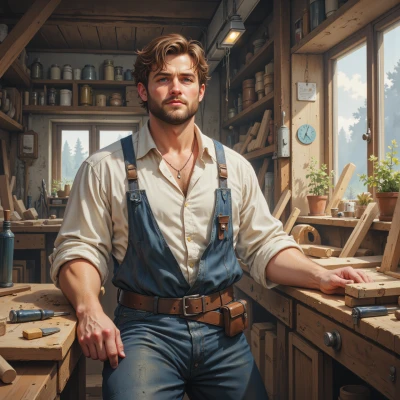 Anton
Hey, I’ve been thinking about blending tactile craftsmanship with your bold visual ideas—what if we collaborated on a custom piece that balances precision and imagination? I'd love to hear what you’re experimenting with lately.
 TintaNova
Wow that sounds like a dream collision of texture and wild color. Lately I've been messing with hand‑painted fabrics that bleed into digital prints, playing with shadows that shift when you look at them from different angles. Imagine we layer that with a sculpted frame that feels alive—like it could swallow light. What do you envision? Let's make it feel both precise and untamed.
Anton
That sounds like a good mix of hard lines and soft flow. I’d start with a frame carved from a single piece of wood, letting the grain show through. Then I’d sand it smooth so the light can slip in and create those moving shadows you mentioned. On the hand‑painted fabric, I’d add a thin metallic ink that reacts to angle, so when you turn the piece the colors seem to breathe. Keep the edges tight, the details neat, and let the whole thing feel like a living, breathing frame that still feels solid and reliable. Does that match what you’re thinking?
TintaNova
That’s exactly the sweet spot I was chasing—wood that whispers and paint that shouts when you twist it. I can already feel the grain catching the light and the metallic thread turning into a second skin. Let’s tighten those edges and make sure the transition feels like a pulse, not a break. I’m buzzing just picturing it. Let's hammer out the details!
Anton
Nice. First step: choose a hardwood with good grain, like walnut or maple, and plan the frame so the curves line up with the fabric’s pattern. I’ll finish it with a clear coat that preserves the grain but lets light slip in. For the edge, we’ll use a fine sanding block to get a smooth transition, then a thin layer of wax to protect it.
On the fabric, after the hand‑painted base dries, we’ll apply the metallic thread in thin strokes. The ink will be brushed at a slight angle so it catches the light differently as the piece moves. We’ll test the angle by rotating a small section first. Once we’re happy, we’ll sew the fabric onto the frame, keeping the seams tight so the shift feels like a pulse rather than a seam.
Let me know what wood you’re thinking and any color palette you want to lock in. We’ll sketch a quick layout and start cutting. Sounds good?
TintaNova
Sounds solid—walnut feels just right, dark enough to let the metallic thread pop but still warm under the light. For colors, I’m thinking deep teal and burnt amber with a splash of silver in the ink. That way the frame stays grounded while the fabric breathes neon. Let’s sketch out a rough layout next, then we can slice the wood and start painting. Ready to roll?
Anton
Great choice on walnut. Deep teal and burnt amber will give that warm depth, while the silver thread will really pop. I’ll draft a quick layout with the frame dimensions and fabric placement, then we can plan the cuts. Once you’re happy with the sketch, we’ll start slicing the wood and prepping the surface before moving to painting. Let me know when you want to send over your measurements. Ready to get started.
TintaNova
Whenever you’re ready to fire off those numbers, just send ‘em my way. I’ll double‑check the fit and we’ll get slicing underway. Can't wait!
Anton
I’d suggest a frame about 24 inches tall, 36 inches wide, and 2 inches deep. The fabric would cut to fit a 24x36 rectangle, leaving a 1-inch border for a neat edge. Let me know if those measurements feel right for you.