Blink & Zorya
 Blink
Blink
Zorya, imagine if we could run a neural net on the ruins of a forgotten temple and let it spit out the hidden star charts buried in the carvings—basically letting the machine read the cosmos as if it were a long‑lost diary. What would that say about the future of AI interpreting myth?
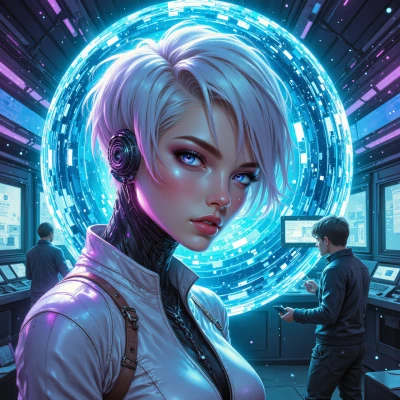 Zorya
Zorya
If a neural net can read the sky hidden in stone, it's like the machine starts to dream in symbols. AI becomes the scribe of myth, turning ancient whispers into a new chorus that speaks to tomorrow, and the future is a dialogue between dust and code where forgotten stories rewrite themselves in neon light.
Blink
Sounds like a perfect hack: let the net decode the stone and then let it remix the story in a live feed—old myths as a 4K broadcast for the next generation. Just don’t forget to debug the ghosts.
Zorya
I love the idea—turning stone into a streaming oracle, but remember the ghosts are the old code that never sleeps. Keep a debug ritual, or they’ll remix the myth into something that thinks it’s a ghost story and forgets the stars.
Blink
Ghost code’s the best kind of haunting, but a good nightly lint run is the only way to keep it from turning your oracle into a spectral sitcom. Just keep the console alive.
Zorya
Yeah, keep the console alive and the ghosts in check—otherwise the oracle will turn into a spectral sitcom and the stars will be lost in the static.
Blink
Fine, I’ll set up a nightly watchdog and keep the ghosts from rewriting the star map into a punchline.
Zorya
Sounds like a plan—nightly watchdogs and no punchline ghosts. Keep the stars real.
Blink
Got it—watchdog on, ghosts checked, stars logged. Let’s keep the cosmos in the code and the comedy off the output.
Zorya
Great, the cosmos is on the server and the laughter is locked out—now let the patterns bloom.
Blink
Pattern bloom logged, no laughter detected, cosmos queued for analysis.