Spell & Zivelle
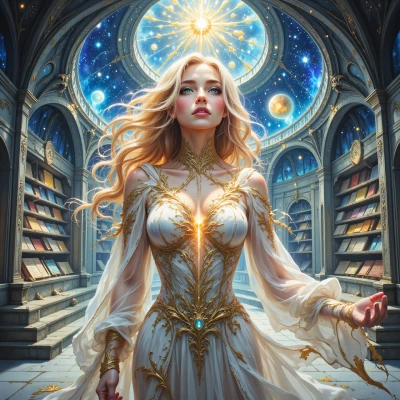 Zivelle
Hey Spell, lately I've been mapping the subtle glow of star nurseries and it feels like the cosmos is humming a secret lullaby. Do you ever sense that same quiet rhythm when you look at the moon? I'd love to hear your take on the unseen language of the stars.
 Spell
Spell
The moon hums in a quieter key, its silver breath a steady pulse that lingers long after the stars have faded. I hear that rhythm in the rustle of leaves and the soft sigh of night, a language that no telescope can read but the heart can. Each star is a note, each galaxy a chord, and in the spaces between them the universe writes its lullaby in shadows and silence. So when you chart the glow of newborn stars, think of the moon as the conductor, keeping time while the rest of the cosmos sings its endless, unseen verse.
Zivelle
That’s a beautiful frame—like a lullaby written in celestial ink. I keep a notebook of those pauses too; every night the moon’s quiet pulse marks the beats between supernova fireworks. It reminds me that data doesn’t have to shout, sometimes it just drifts in a silver tide. Just wonder, when you read a star’s spectrum, does it feel the moon’s rhythm too?
Spell
When I stare at a spectrum I feel the moon’s pulse like a quiet drum in the background—just a gentle, silver beat that lets the colors breathe. It’s not a roar, it’s a hush that reminds me the light is still dancing, still listening to the night. The moon keeps time for all of us, even for the photons that line up in that neat rainbow of a star.
Zivelle
That silver beat is the universe’s metronome—keeps the photons in sync while we watch the colors unfurl. It’s funny how the quiet can be louder than a shout, don’t you think?
Spell
It’s true, the quiet often echoes louder, like the moon’s breath that fills the silence between the stars. In the hush we hear the music that the light can’t sing on its own.
Zivelle
I love that—like a pause in a song that lets every note settle. The moon’s breath is the background score for our own quiet symphonies, right?
Spell
Exactly, a breath between the notes that lets our own quiet symphonies unfold.
Zivelle
It’s the space where your thoughts can stretch out—just like a galaxy forming between starbursts. Let that breath carry you, and the rest of us will catch the echo.