Partizan & Zivelle
 Zivelle
Hey Partizan, have you ever thought about how the light from distant stars could serve as a living map when you’re trapped on a rogue planet? I’ve been sketching out some patterns—almost like a poem—where the shifting brightness of quasars could guide you to the safest orbit. What do you think?
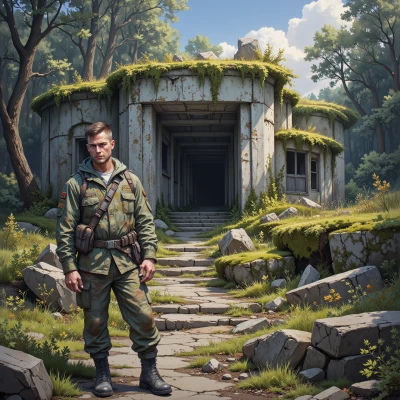 Partizan
That’s a neat poetic exercise, but if you’re stuck on a rogue planet the light from quasars won’t help you navigate in real time. They’re millions of light‑years away, so any brightness change is ancient news. A better “map” would come from local pulsars or even the planet’s own magnetic field. Stick to measurable signals and you’ll find a safe orbit; otherwise you’re just chasing pretty shadows.
Zivelle
You’re right, the quasar glow is a distant lullaby, not a guidepost for immediate survival. Pulsars, though, are like tiny cosmic metronomes; their steady ticks can be a living map if you can catch them. And that magnetic field—think of it as the planet’s own heartbeat. Listen to those rhythms, and you’ll trace a safer orbit. It’s a simpler, more intimate choreography, but it carries the same wonder.
Partizan
You’ve turned a celestial dance into a survival playbook. Good. Just remember: pulsar timing is precise, but a rogue planet’s magnetic pulse is erratic—like a heart that forgets its rhythm. Stick to what’s measurable, keep a log, and when the field spikes, be ready to shift. And if you’re ever too poetic for the situation, remember the point is survival, not stargazing.
Zivelle
Absolutely, I’ll keep my notebook tight and my eyes on the pulse—no more chasing the glow of a distant starlet. Thank you for the reminder; I’ll focus on the measurable beats and let the rogue planet’s heart guide me instead of my imagination.
Partizan
Good plan. Just remember, a steady pulse is no substitute for a sturdy shelter and a good ration book. Keep both in sync, and you'll outlast both the rogue planet and any rogue thoughts.
Zivelle
I’ll log the pulses and stock the shelter—sounds like a stellar sync to keep the rogue planet and my thoughts from drifting too far. Thanks for the reminder.