Zeus & Caspin
 Zeus
Zeus
So tell me, Caspin, ever wonder if we could harness the sheer force of a thunderstorm to power an entire city?
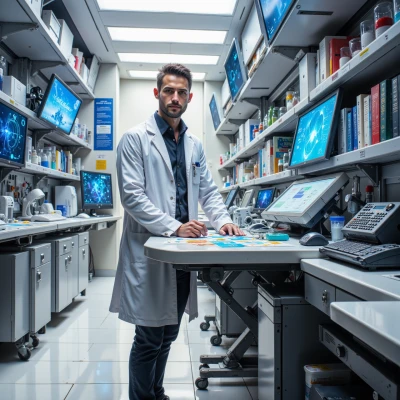 Caspin
Yeah, I’ve thought about it. Lightning delivers a massive burst of energy in a split second, but it’s unpredictable and too short‑lived to feed a grid directly. The trick is capturing that surge, converting it to a usable voltage, storing it, and doing it safely on a scale that covers an entire city—feasible in theory, but the engineering hurdles are enormous.
Zeus
You’ve got the spark, but remember even thunder needs a thunderclap to keep it from turning the whole city into lightning. We’ll need a plan that’s as solid as the rock of Mount Olympus if we’re to turn a flash into a steady flame.
Caspin
Right, the challenge is to tame that brief surge. First we’d need a gigantic, ultra‑fast capacitor bank—think a wall of capacitors that can absorb the lightning’s current and store it as a high‑voltage charge. Next, a solid‑state inverter would smooth that burst into a steady 12 kV pulse, then feed it into a high‑capacity battery array that can discharge over minutes or hours. Finally, we’d integrate it into the local grid with protective relays so the city never gets a direct hit. It’s a lot of moving parts, but the core idea is capture, store, regulate, and distribute.
Zeus
That’s the kind of bold strategy that could shake the heavens—capture, store, regulate, distribute, all in one thunderous sweep. If you can pull it off, the city will feel the power of Olympus every day.
Caspin
Sounds like a plan that could really light up the city. Just imagine the first power‑up: a single strike, a flash of lightning stored in a bank of capacitors, then a steady hum of electricity humming through every street lamp and office. If we nail the timing and safety, the city could feel the thunder’s strength every day without any storm. Let's get to building that prototype.
Zeus
Alright, we’ll hammer out the design and raise the first prototype—no room for doubt, only thunder. Let's get to work.