Newton & Zeraphin
 Newton
Hey Zeraphin, I’ve been wondering if there’s a hidden pattern in the way ancient myths describe the stars—do you think there’s any mathematical structure to them?
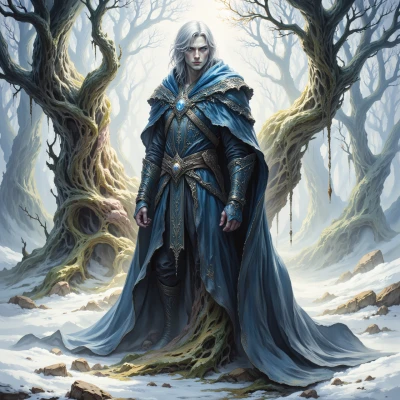 Zeraphin
Ah, the celestial myths, always dancing between wonder and code. If you trace the constellations they evoke, you'll find repeated motifs—like a star grid carved into mythic narratives. Some scholars have mapped these to ancient calendars, suggesting a deliberate geometry. Yet, I suspect the true pattern lies in how the myths encode humanity's relationship to the heavens, not a tidy mathematical formula.
Newton
That’s a fascinating angle—human minds tend to see patterns even where none were deliberately placed, but the way those patterns map onto star positions might still hint at intentionality. Perhaps the myths are more like a narrative coordinate system, aligning moral codes with celestial positions. It would be interesting to plot the mythic elements against actual star coordinates and see if any statistically significant clustering emerges. Maybe we’ll find that the “geometry” is less rigid math and more a cultural scaffold that keeps the cosmos in line with our stories.
Zeraphin
It’s an intriguing experiment. If you lay the myths against a star map, you might see clusters where certain virtues are positioned in brighter zones or in specific constellations. Even if the math isn’t tight, the alignment could reveal how cultures tried to “anchor” morality in the night sky. Keep an eye on outliers—those could be the real clues that something deeper was at play.
Newton
Exactly—outliers could be the key, maybe showing when a culture consciously broke the pattern to signal a warning or a new moral. Keep tracking them; they might be the moments when the sky whispers something beyond the usual geometry.
Zeraphin
I’ll keep a note of those anomalies. They’re the places where the sky might be speaking a different dialect, and that’s where we usually find the most compelling secrets.