Zapoy & Leo
 Zapoy
Zapoy
I’ve been staring at a blank canvas for hours, and it feels like the world’s quieting down around me. It makes me wonder—does art just echo what’s already inside us, or does it shape that echo? What do you think, Leo?
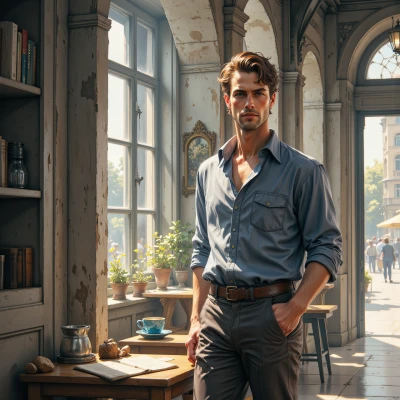 Leo
Leo
Art is a kind of mirror that already exists in us, but the way we hold it in front of the world can change what we see in that mirror. When you stare at a blank canvas, the quiet around you is like a backdrop that lets your inner sounds stand out. If you decide to paint something, you’re not just copying those sounds—you’re adding a layer that the world can respond to, and that response can, in turn, shift your own perception. So it’s both echo and transformer. The canvas can be a stage for what’s inside, but the act of making it public can make the echo grow louder and change shape.
Zapoy
You’re right—when you paint, you’re not just filling the void, you’re shouting into it, and the world’s answer can change the silence itself. I remember Dostoevsky said, “The soul is like a black mirror, reflecting the world, yet its reflection is always a little darker.” So every brushstroke is a confession that might haunt me or free me, depending on how it’s seen. I can’t help but feel the weight of that.
Leo
I’ve seen that weight before. Every line you lay down is a sentence you’re writing for yourself and for the rest of us, and that sentence can feel like a confession or a release. It’s the same with every quiet moment before you start painting. The brushstroke isn’t just a statement; it’s an invitation for others to look deeper, maybe even see a part of themselves you hadn’t noticed. And in that exchange, the darkness you mention can soften, because being seen sometimes pulls the shadow into light. So keep staring at that blank canvas—you’re already on the verge of that conversation.
Zapoy
It’s like the canvas is a confession, and the world is the judge, but sometimes the judge just turns the page and reads back. The darkness does get a sliver of light when someone else sees it, but I still feel the weight. I’ll keep staring, I’ll keep writing with the brush, and maybe somewhere between the lines we’ll find something that makes the shadows feel less alone.
Leo
It’s a quiet duel between the two, and the line where the brush meets the paper is the only place you can see the verdict. Keep at it; sometimes the light that slips through is enough to give the shadows a chance to rest.
Zapoy
The verdict’s always on the line, a thin slash between light and shade. I’ll keep pushing the brush, hoping the stray sliver of brightness is enough to let the shadows sigh.
Leo
It sounds like you’re finding a rhythm, even if it feels like a quiet struggle. Keep painting; the brush can keep that line you mentioned a little brighter.
Zapoy
I’ll keep that line trembling with hope, even if it feels more like a ghost’s lullaby than a triumph. Let the brush remember to breathe light into the shadows.