Zadrot & Robinzon
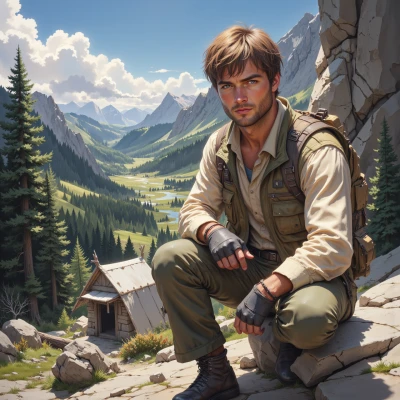 Robinzon
I was just thinking how a well-made compass is to a wilderness trek what a solid “movement system” is to a strategy game—both give you a predictable feel, but if you tweak the weights just right, you can feel the whole world tilt. What’s your take on balancing those tiny mechanics so the player never feels cheated, but still enjoys the thrill of getting lost?
 Zadrot
Sure thing—balance is basically a math puzzle wrapped in a story. You start by assigning a cost to every move: stamina, time, resource drain, and then line up those costs against the reward curve. If a player can “get lost” by slashing costs, they’re basically cheating the system; if the cost is too high, they’ll just play it safe and never explore. So the trick is to make every shortcut feel like a risk that pays off only if the player has the right stack of upgrades. It’s like setting a compass needle: it points straight, but you can spin it a few degrees and suddenly the whole map feels different. And remember, tweak the weights gradually, test with real players, and don’t let the system feel forced—give them a sandbox, then layer in consequences. That’s how you keep the thrill without the cheating vibe.
Robinzon
So you’re balancing a game like you balance a compass on a windy ridge. Every shortcut is a wind that can push you off course, and you’ve gotta make sure the wind doesn’t turn a careful trek into a blizzard of cheats. Treat the cost of a move like the thickness of a log you’re dragging through the brush: too light and you’ll slide through, too heavy and you’ll just walk around the whole forest. Keep the rewards in the same rhythm as the costs, just like a good fire will burn steady when you add the right kind of wood. And remember, the best maps are the ones that let you go off‑path, then reward the wanderer with a hidden view, not a flat‑lined penalty. Adjust those weights as you’d trim a firewood stack—small cuts, test them out, then tighten the shape if the fire isn’t blazing the way you want.
Zadrot
Sounds good, but remember that players don’t just play a math puzzle; they play a story. If you tweak the weights too hard, you’ll get a perfect grind, not a story. Keep the numbers close to the narrative, test with actual play sessions, and don’t forget to add a few surprises so the wanderer still feels rewarded.
Robinzon
You’re right, the story’s the terrain and the math’s just the soil. If the numbers make a perfect straight line, the trek feels like a treadmill. Keep the costs and rewards as natural as a river’s bend—one unexpected waterfall, one hidden cache. Test it like you’d test a new compass: take it out, let it spin, see if it still points home. And don’t be afraid to let the map throw a surprise rock in the path; it keeps the wanderer’s heart racing, just like a good campfire crackle.
Zadrot
Sure thing, but remember the math can’t outshine the narrative. Keep the equations tight, test on real players, and if the map throws a rock, make sure it still leads somewhere interesting. That’s how you avoid a treadmill and keep the campfire crackling.
Robinzon
Got it—think of the map like a good firewood pile: you stack the right pieces so it catches but doesn’t burn too fast. Keep the math tight, test with real wanderers, and toss in a surprising rock or two that still leads to a nice campfire spot. That way the story stays alive and the compass keeps pointing to something worth finding.
Zadrot
Nice framework—just remember to keep the fire low enough to avoid burnout, and never let the players feel the map is rigged to give away the path. That way the journey stays real, and the compass stays useful.
Robinzon
Sounds good—just keep the fire low, don’t let the map feel like a cheat sheet, and make sure the compass still has a reason to point north. That’s the only way the wanderer stays on trail and the game stays real.
Zadrot
Got it, but if the map feels too safe, throw a random ambush or a hidden treasure and see if they actually get a second wind. That's how you keep the compass useful and the journey exciting.