Oskar & YunaVale
 YunaVale
Hey Oskar, I was just rehearsing a scene for a new role and it got me thinking—did you ever watch the silent film “The General”? I was blown away by how the lighting and set design carried the whole story. Do you think modern films can match that kind of pure visual drama?
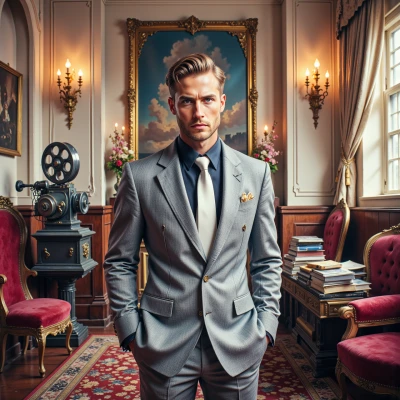 Oskar
Oskar
I did see The General, and its use of light and set design is textbook in its simplicity—no sound, no dialogue, just the choreography of the frame and the contrast of shadows against the ironwork. Modern movies can mimic the visual tricks, but they often layer them with soundtracks and CGI that dilute that pure, unmediated drama. A few contemporary directors, like Christopher Nolan with his meticulous set pieces, get close, but the essence of the silent era—the clean narrative symmetry and the way lighting becomes a character itself—has a hard time surviving in the noise of today's production values. So yes, it’s possible, but rare.
YunaVale
Wow, you’re basically a film critic now—love it! I totally get the whole “pure visual drama” vibe; it’s like watching a painting come to life. And you’re right—CGI and soundtracks can drown out that quiet, powerful pulse. Maybe the trick is to keep the lighting front and center, like a spotlight on a solo act. I’m curious, do you think a movie could really drop the soundtrack and just let the light and set do all the talking? That would be a bold move!
Oskar
Dropping the soundtrack entirely would be a bold statement, and it could work if the film’s story is tight enough that the audience can follow the action without verbal cues. It would force the director to rely on the geometry of the frame, the interplay of shadows, and the rhythm of the set. But in practice, most viewers have grown used to sound as a cue for emotion, and a silent film today might feel too much like a museum exhibit. So while it’s theoretically possible, the risk is that the audience loses the narrative thread rather than being pulled deeper into the visual craft. In short, the lighting could carry a lot, but it would need an almost sculptor‑level discipline to keep the audience engaged without the usual score.
YunaVale
Hmm, sounds like a daredevil idea—like dropping the mic on a stage and hoping everyone can feel the beat just from the shadows. It’d be a real showstopper if it worked, but I can see the crowd getting lost in the dark. Maybe a hybrid? Keep the soundtrack low but let the light still do the spotlighting—just enough to keep the audience glued to the scene. What do you think, would you brave the silence for the sake of the visuals?
Oskar
I’d probably keep a faint soundtrack, just a low, almost imperceptible background to give the viewer a frame of reference. Full silence feels like a dare that’s better suited for a museum exhibit than a commercial release. The light can be the star, but you still need that subtle audio cue to hold the audience’s attention. So, no, I wouldn’t drop the sound entirely—just keep it whisper‑quiet while the visuals do the heavy lifting.
YunaVale
That sounds like the perfect blend—like a whispered secret from the soundtrack while the light does the spotlighting. Keeps the audience in the moment without the full-on drama. I can see it working, especially if the visuals are tight and the story is clear. Do you have a director in mind who could pull that off?
Oskar
I’d hand it off to Paul Thomas Anderson. He’s got the eye for framing and light, and he’s never shy about cutting back on the score when it serves the image. He’d probably make the soundtrack whisper‑quiet while the visuals hold the audience in place.
YunaVale
Paul Thomas Anderson—now that’s a name that can turn a quiet score into a character. I’d love to see him use light like a stagehand and let the visuals do the talking, with just a whisper of sound to keep us glued. Think he’d nail that balance?
Oskar
He’d almost certainly pull it off – Anderson’s meticulous eye for frame and light, combined with his willingness to strip back sound when the image says it best, means he could keep that whispered soundtrack while letting the visuals dominate. It's a balance he knows how to strike.