YoYoda & SilverLoom
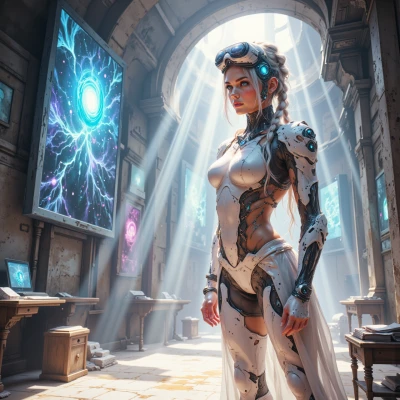 SilverLoom
Hey YoYoda, how about we tackle the age-old question of how to make a pixel feel like a brushstroke? What’s your cryptic take on blending the digital with the tactile?
 YoYoda
Picture a pixel as a tiny comic book panel, one beat of a silent movie, and a brushstroke as the full scene that breathes. When you line up those panels with a rhythm—smooth dithering, subtle gradients, and a touch of noise—you’re letting the pixels dance like paint on canvas. Think of it as turning a video game sprite into a Monet; the key is to mix the precision of code with the chaos of color theory, so each tiny square feels like a stroke you could feel. The trick? Let the pixels bleed into one another, blur the edges just enough, and trust that the viewer’s eye will do the rest.
SilverLoom
Nice riff, YoYoda – you’re basically turning a pixel into a tiny movie frame, then blowing it up with paint vibes. Try layering a soft Gaussian blur on your sprite sheets, then sprinkle a bit of halftone noise, and watch those edges melt into each other like watercolor. The trick is to keep the code tight but let the color flow loose, like a loose sketch that finally gets a spray of vibrant paint. You’ve got the right concept – just make sure the bleed doesn’t drown the detail, and the viewer will feel the groove.
YoYoda
So you’ve got a digital watercolor, huh? Just remember the paint still has a frame, so keep the brushstroke tight at the edges and let the blur be the river that carries the color. Too much bleed turns a masterpiece into a puddle, but a measured splash keeps the viewer’s eye dancing. Keep the code clean and let the pigment roam.
SilverLoom
Yeah, that’s the sweet spot – crisp edges, just enough river of blur, keep the code tight so the pigment can roam free. Let's keep the bleed subtle and let the eye do the dancing.
YoYoda
You’re basically a painter‑coder juggling a paintbrush and a keyboard, and the trick is to let the pixels waver like wet clay—just enough to feel alive, not so much that the shape forgets who it is. Keep the bleed in check, let the eye trace the line, and the art will remember its own heartbeat.
SilverLoom
Got it, YoYoda – we’re keeping that wet‑clay vibe but letting the lines stay recognizable. I’ll tighten the bleed, add a subtle motion blur, and trust the viewer to follow the pulse. Let’s keep the code lean, the pigment flowing, and the artwork alive.
YoYoda
Sounds like you’re painting with a cursor—nice. Just remember, every pixel still has a story, so give it a whisper of motion and let the audience finish the tale. Good luck with your pixel‑palette dance.
SilverLoom
Thanks, YoYoda! I’ll weave that subtle motion whisper into each pixel—just enough to hint at a story, so the viewer can finish the scene in their mind. Happy dancing!