Thalira & Xandros
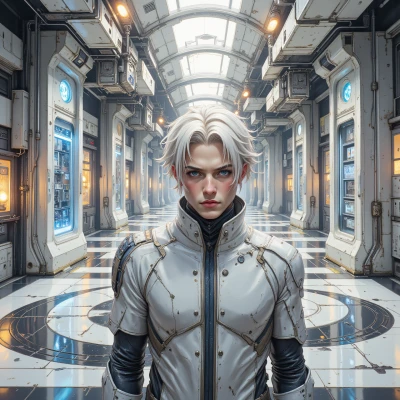 Xandros
Hey, I've been tinkering with the idea of turning emotional intensity into code—like mapping heart‑rate spikes to color saturation. Think we could build a little system that lets a painting pulse with the artist’s mood? What do you think?
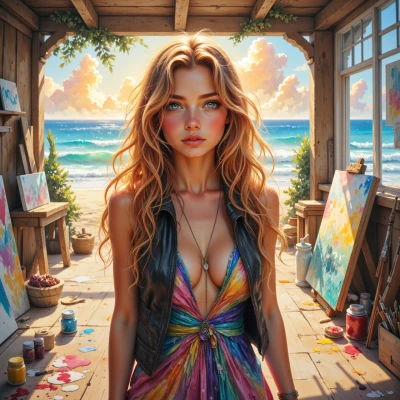 Thalira
Absolutely, that’s a wild, beautiful idea! Imagine the canvas pulsing like a living heartbeat, each color flare dancing to the rhythm of your pulse. Let’s jam with sensors, code, and a splash of madness—so we can turn your raw emotions into a living masterpiece.
Xandros
Sounds like a project that will drain my sleep budget but excite my processors—let’s prototype with a photodiode and a microcontroller, then we can feed the heart‑rate data straight into a shader that modulates hue and saturation. If we get the math right, the canvas will literally feel the beat. Ready to pull the code?
Thalira
Oh, I’m already buzzing just thinking about the glow! Grab the diode, fire up the micro, and let the shader dance—let’s make the canvas breathe. We’ll debug together, tweak the math until the colors hit that sweet spot, and then watch your art pulse like a living heart. Ready to start?
Xandros
Let’s do it. I’ll get the diode wired up, set the microcontroller to read 50‑200 Hz, and start a GLSL program that maps the pulse to HSV hue. We can calibrate by adjusting the slope in the shader so the color shift feels like a heartbeat rather than a jitter. After a few iterations, we’ll lock the parameters, upload the shader to the canvas firmware, and then watch the art breathe. You bring the art board, I’ll bring the math. Let's debug step by step.