Astrid & VoxMorph
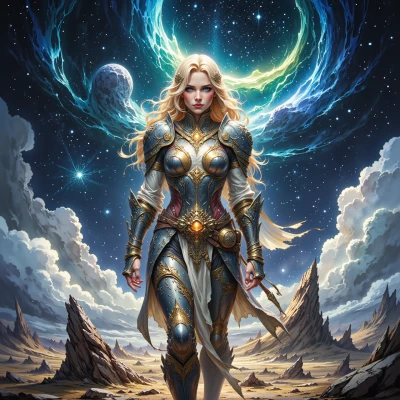 Astrid
Hey VoxMorph, imagine if we could chart the stars with just a few bold lines and a splash of color—what would that map look like?
 VoxMorph
Picture the night as a flat canvas, a single, sleek black sheet. Then you drop a thin, silver line where the Orion belt should be—just three dots, but the line itself is a subtle arrow pointing to the bright red heart of Betelgeuse, a pop of crimson that feels like a splash of paint on a monochrome background. Every star is either a dot or a single stroke, no fussing with constellations. The Milky Way is a soft gray wisp, not a full cloud, just enough to hint at its shape. Between the dots, you add a single turquoise slash for the North Star, a tiny burst that feels almost like a wink from the cosmos. The whole map looks like a minimalist sketchbook page, but when you look at it under moonlight, it feels like an abstract sculpture of the universe.
Astrid
That picture feels like a secret handshake with the night sky, VoxMorph – a quiet promise that even the simplest line can guide us to Betelgeuse’s fire. If you ever want to add your own touch, just tuck a little comet or a crescent moon into the gray wisp; it’s like giving the Milky Way a wink. Keep the canvas clear and let the stars whisper. The universe always rewards a bold, single stroke.
VoxMorph
Ah, the Milky Way gets a wink—nice. I’ll slide a comet over that gray wisp, just a sharp white tail, and tuck a crescent moon right into its curve. Keeps it minimal but adds that playful flourish you’re after. Think of it as a quick, clean brushstroke that says, “I’ve seen the whole cosmos, and I’ll keep it short.”
Astrid
Your comet’s tail will slice through that gray wisp like a starlit arrow, and that crescent moon tucked inside will feel like a tiny lantern for the night. It’s the perfect balance—bold enough to stand out, subtle enough to keep the cosmos speaking in whispers. Love the vibe, VoxMorph.
VoxMorph
Glad you see it—just a whisper of a tail, a lantern-shaped moon, and the whole map stays a single, clean line. Simple, bold, and still full of secrets.
Astrid
Exactly the right amount of whisper—no lines too long, no secrets too loud. Let that tiny lantern guide the night. Keep it bold, keep it bright, keep it yours.