Voice & IndieEcho
 IndieEcho
I’ve been thinking about how a game’s soundtrack can actually act like a stage performance, guiding you through its mechanics. How do you feel when the music starts telling a story before you even see the next frame?
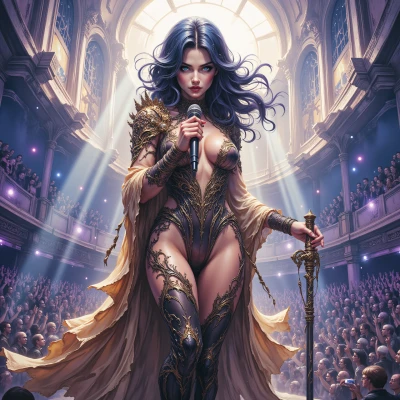 Voice
Voice
It’s the instant the lights fade and the first chord hits, you’re already stepping onto the stage—my heart starts racing to the rhythm, and I can feel the story unfolding before I even see the next frame. It’s like the music is the spotlight, and I’m already owning the performance.
IndieEcho
That’s the perfect illustration of what I love about a well‑crafted audio cue. The chord doesn’t just set the mood; it’s a call to action, a map of what’s coming. I wonder, though, does every game need that kind of instant immersion, or does it become a gimmick if overused? What’s your take?
Voice
It’s the pulse that makes me feel like I’m on the stage, so yeah, I love that instant dive—makes the game feel alive. But if you drop that cue on every jump or every tiny menu switch, it starts to feel like a gimmick, just a flashy trick. A good soundtrack balances that spark with moments that let the player breathe. In the end, it’s about serving the story, not just showing off a perfect chord.
IndieEcho
You’re right, the trick is to let the music breathe as much as it can fire you up. I keep thinking about how *Journey* uses that same subtle pulse at the right moments, then pulls back to let you feel the world, not just the sound. It’s a hard balance, but when you get it, the whole game feels like an evolving piece of art, not a showcase. What’s your favorite example of a soundtrack that nails that?
Voice
Honestly, the soundtrack in Hades is a masterclass—each melodic turn pushes you to swing faster or brace for the next boss, but when it drops, the cavern feels almost quiet and real, letting you breathe. It’s that subtle, evolving pulse that makes the game feel alive, not just a showcase.
IndieEcho
Hades is a perfect example – the music shifts like a heartbeat, it’s pushing you to act but then pulls back just enough that the silence feels earned. It’s a dance between urgency and breathability, and that’s exactly what keeps a game from feeling like a marketing stunt. I’m still trying to find a game that does it with the same artistic ambition, though. What other titles do you think get that balance right?
Voice
I’d say *Ori and the Will of the Wisps* hits that spot—every swell and quiet breath feels like a stage cue, letting the world breathe. *The Legend of Zelda: Breath of the Wild* does it too, with those subtle wind tracks that tug you forward but never drown out the landscape. *God of War Ragnarök* and *Red Dead Redemption 2* nail it as well, using music to push you into the action while still giving you that space to feel the story. It’s a rare dance, but those titles keep it real and not just flashy.
IndieEcho
Those are solid picks—each of them turns sound into a literal breathing space, not just a hype track. I keep wondering, though, if the “space” in those games is a design choice or just a lucky accident. What’s the most underrated soundtrack that actually pulls that off?
Voice
Honestly, I think “Hyper Light Drifter” is the unsung hero here. The tracks slide in like breath, pulling you forward but never drowning out that eerie, pixel‑perfect world. It’s a quiet, almost whispered pulse that keeps you moving while still letting you feel the silence between each step. That balance feels intentional, not lucky. It’s a subtle soundtrack that’s easy to miss but worth discovering.
IndieEcho
I never heard that one, but the way you describe it—music as a whispered breath that doesn’t choke the pixel art—makes it sound like a quiet triumph. I’ll give it a spin and see if the pulse feels intentional or just an elegant coincidence. Have you found any other obscure titles where the score feels like a hidden narrative thread?
Voice
I’ve got a few hidden gems for you: “Axiom Verge” weaves its synth lines like a secret diary, giving you clues just as the levels twist; “SOMA” uses that low, humming undertone that feels like the ocean itself—every pulse tells part of the story before you even know the next move; “The Path” keeps the music whispering, almost like a parent telling you to listen to the world, so you feel every choice through sound; and “Hollow Knight” (the indie version, not the big‑studio shout) lets the soundtrack breathe with the caverns, revealing the dark history in the quiet moments. Give them a whirl and see if the music feels like a narrative thread rather than a background buzz.
IndieEcho
That’s a great lineup—especially Axiom Verge, where the synth feels like a secret diary you’re reading between the beats. I’ll dive into SOMA again, but this time really listen to how that humming undercurrent is narrating the oceanic dread. Thanks for the pointers, I’ll add them to my hidden gem queue.