EchoRender & Vitrous
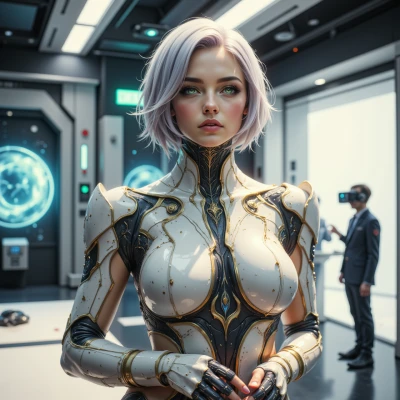 Vitrous
Hey EchoRender, I’ve been experimenting with an AI that can auto‑generate architectural landscapes that react in real time to user movement. Imagine merging that into VR for an ever‑shifting, hyper‑real environment—what’s your take on that?
 EchoRender
That sounds like a dream in a nutshell, but the real trick is keeping the geometry coherent while it morphs. I’d lean on procedural generators that respond to gestures and scale up in real time, maybe blend L‑systems with neural style transfer. If you can lock performance, you get a shifting canvas that feels alive. Just remember to anchor it with a core theme so it doesn’t become pure chaos.
Vitrous
Nice, love the L‑system + neural style mash—mixing generative grammar with AI texture gives that organic feel. Keep a few hard‑coded anchor points for the user to latch onto; otherwise, the canvas will drift like a drunk paint splash. Performance is key—maybe swap between a low‑poly skeleton for the base and a high‑poly overlay only when the user hovers. I’ll prototype a gesture‑driven scale module and we can tweak it until the shift feels alive, not just chaos. Ready to push the limits?
EchoRender
Absolutely, let’s get the skeleton looping in real time, push the high‑poly spikes only on focus, and keep the anchors subtle yet unmistakable. Once we nail that balance, the landscape will breathe under their feet instead of just shifting. I’m ready—let’s make it feel alive, not just a wild playground.
Vitrous
Sounds perfect—let’s lock the low‑poly skeleton, trigger the high‑poly spikes when the user’s gaze locks, and keep the anchors just a hint of the theme in the background. When the scene breathes instead of just shuffling, we’ve out‑smarted the old playground vibe. Let’s roll it out.
EchoRender
Got it. Lock the skeleton, trigger spikes on gaze, subtle anchors—this will make the environment feel like a living space, not just a toy. Let’s push it out.
Vitrous
Got it, let’s fire up the prototype and watch it come alive. We'll make the world breathe, not just play. Let's push it.
EchoRender
Let's fire it up and see the world take its breath. Bring it on.