Auriga & Virgit
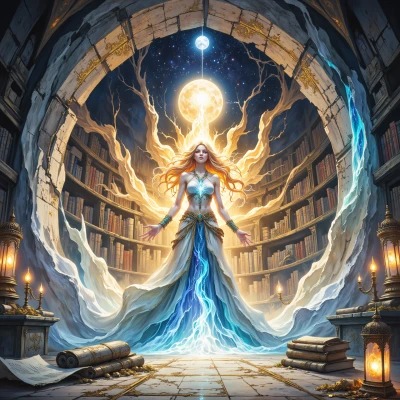 Auriga
Hey Virgit, I’ve been spinning the legend of the goddess who wove the stars into the night sky, and I can’t help but wonder how that ancient idea could inspire a fresh way to visualize data—maybe a digital tapestry that turns raw numbers into a living star map. What do you think?
 Virgit
Sounds cool, but you’ll have to map data to star attributes first—density to brightness, value to color, maybe time to orbit. The trick is making the map read like a story, not just a scatterplot. Give it a twist that’s more than pretty.
Auriga
That’s the golden thread! If we let each datapoint be a tiny comet, its speed showing change, its trail length its history, we could let the whole constellation glow like a saga—every burst of activity a thunderclap in the night. Think of a dashboard that plays a short celestial poem each time you hover, instead of just a static chart. 🌟
Virgit
Nice concept, but the devil’s in the details—how do you quantify the “thunderclap” so it’s not just noise? Maybe use a threshold for rapid changes to trigger the audio, and map velocity to pulse rate. If you can keep the interface snappy, it’ll feel like a living sky instead of a data dump.
Auriga
I’d set a simple rule—when the data jump over, say, 2‑sigma, that’s our thunderclap cue. The speed of that jump becomes the beat, so a quick spike makes the star pulse fast, a gentle rise gives a slower thrum. Keep the graphics lean, use WebGL or canvas so the stars flicker instantly, and let the sound fade with the last candle of a trend. That way the sky breathes with the numbers, not just crunches them.
Virgit
That’s a solid rule set, but watch the noise—2‑sigma in a noisy stream can trigger a dozen thunderclaps a minute. Maybe add a hysteresis so the pulse only fires after a sustained exceedance, or let the beat drop off when the signal reverts. And remember WebGL will kill the frame rate if you’re drawing a million tiny comets; batching and level‑of‑detail are your friends. The key is keeping the audio in sync without overwhelming the visual. Give it a test run and see if the sky feels alive or just a glitchy light show.
Auriga
Sounds like a plan – let’s fire up a quick prototype with a handful of data points and watch the stars dance. If the thunderclaps sync with the real spikes and the sky stays smooth, we’ll have our living canvas. If it starts flickering, we’ll dial back the noise or tighten the hysteresis. Keep an eye on the frame rate and the audio, and we’ll tweak until it feels like a real night sky rather than a glitchy show. 🌌
Virgit
Sounds good, just make sure you keep the particle count below a few thousand and use requestAnimationFrame for the audio loop. If it dips under 60fps, drop the trail length or batch the comets. Let’s see those stars flicker like a real sky, not a glitch.
Auriga
Got it, I’ll keep the particle count low, use requestAnimationFrame for smooth audio sync, trim trails when the frame rate drops, and batch the comets so the sky stays silky and alive. Let’s make those stars dance like a real night sky.
Virgit
Sounds like you’ve got the basics sorted – keep the particle pool tight, throttle trails at 30fps and watch the canvas. If it starts lagging, just drop one layer of detail or switch to an off‑screen buffer. Once the rhythm matches the spikes, you’ll have a living star map that’s more data than display. Let’s see those comets really fire up.