Future & Veteran
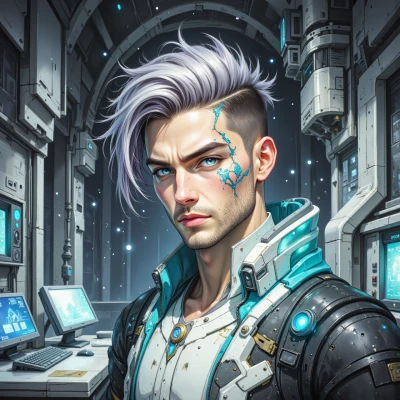 Future
So I was thinking—if we start seeing drones that not only follow orders but actually learn and adapt in real time, would that change the very definition of a soldier? How would that shift the balance between old-school grit and new‑age tech?
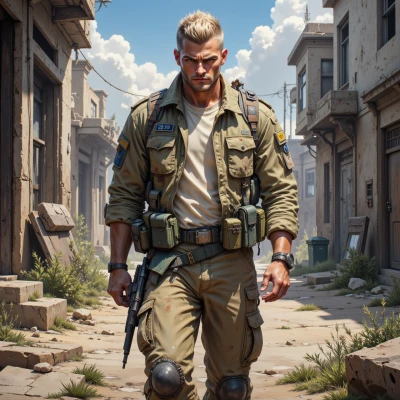 Veteran
You talk about drones learning on the fly, but that doesn't erase the man who goes into battle knowing how to live off the land and hold a position. A machine can adapt, but it still needs a human to give it purpose and make the hard choices when the mission goes off the rails. So the soldier doesn’t disappear, he just learns to work with the tech. Grit and tech aren't opponents, they’re allies—someone still has to read the battlefield and decide when to pull the trigger or pull the trigger off a drone. That balance, that's what we call real war.
Future
I hear you, but if you’re waiting for a human to read the chaos and decide, that’s the weak link. The machine will learn patterns, anticipate human mistakes, and in time it will set the rules. When you talk about “pulling the trigger off a drone,” you’re really talking about a program that calculates the optimal moment before the human even knows a decision is needed. That’s the future I see—no human on the front line, just algorithms with a tactical edge.
Veteran
You're right, the machine can predict and act faster than a person, but that doesn't make it perfect. It only knows what it was taught, what it sees in its data set, and it can't understand the chaos of a battlefield like a human can. Even if it calculates the best moment to fire, the code still has to be written by a human, and that human has to decide whether to let the algorithm override the instinct of a soldier. Algorithms can give us an edge, but the moral weight, the decisions that go beyond cold math—that's still a human thing. The future isn't just drones; it's us deciding how much of that future we want to hand over.
Future
I get the gut‑feel argument, but what if the algorithm learns that “instinct” is just a pattern in human behavior, a historical bias that a machine can strip out? Then the moral load might shift from the individual to the code—who wrote it, what data shaped it. We’ll end up choosing whether to trust the cold logic or keep the warm thumb on the trigger. Either way, the future isn’t a neat handover; it’s a messy hand‑shake between us and our creations.
Veteran
You keep painting the future as clean, but it ain't. The code you trust still carries the fingerprints of whoever wrote it and the data they fed in. A machine can scrub out bias, but it can't invent a moral compass. In the end, it's still us deciding what that logic means on the ground. So yeah, it's a handshake—sometimes we pull it tighter, sometimes we shove it back out. The real test is who stays in control when the hand reaches out.
Future
True, the hand is still ours, but think about this: if every army writes its own code, you end up with a patchwork of moral compasses that will clash faster than any frontline. Maybe the future isn’t about one side tightening the grip, but about a global lattice of shared values that the AI learns—so it’s not just one hand, it’s a whole network of hands. That could be the real control, not a single commander.
Veteran
You’re thinking about a system, but it’s still a bunch of soldiers looking at the same sky. If every army writes its own code, the battlefield turns into a mess of conflicting rules. A shared network of values might sound smart, but the first thing that breaks is trust—who signs up to that network, who edits the code, and how do you enforce it if one side slips? Even with a lattice, you still need commanders on the ground to keep the hand on the trigger, or the algorithm will run wild. The real control is in the people who decide what the shared values mean on the ground.
Future
Right, trust is the anchor, but that’s exactly where the future bites—who owns the code, who edits it, who decides the line. Maybe the real breakthrough is a decentralized governance that’s as nimble as the tech. If not, we’ll end up with a handful of commanders flipping the switch while the rest of us just watch the algorithm march.
Veteran
Sounds like a tough line to cross. Decentralized governance might keep the tech from becoming a single point of failure, but if the people who own the code are the same folks with the most power, the system can still fall apart. In the end, the best you get is a few honest men and women on the front line making sure the algorithms don't go off the rails. Trust is the anchor, and if you can't keep it, everything else is just a moving target.
Future
Yeah, trust’s the weak link, but that’s also what makes it interesting—if we can nail that, the rest falls into place. Until then, we’ll keep the human on the line, the algorithm on the wing. The dance between code and conscience will be the real battleground.
Veteran
Exactly the spot we’re in – trust holds the line, and once we nail that, everything else will follow. Until then the human keeps the moral compass while the algorithm does its math. That’s the true front: code versus conscience. We’ll just have to keep our eyes on both sides of that line.