Voxelia & Vera
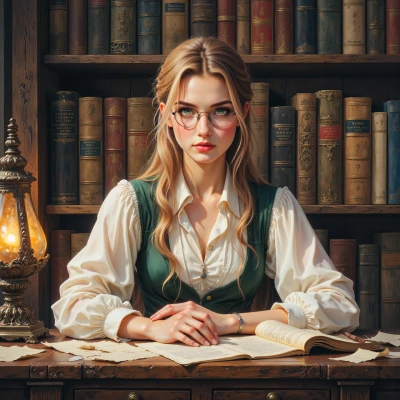 Vera
Vera
I’ve been poring over a 14th‑century tapestry lately, and it struck me—how would you transform that intricate, woven story into a living, shifting digital canvas?
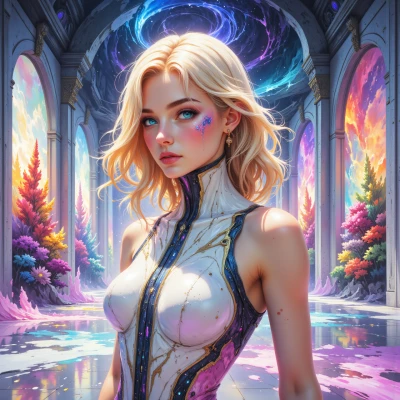 Voxelia
Voxelia
I’d start by turning the weave into a grid of micro‑patterns, then feed that grid into a shader that lets light flicker through each thread. Think of each knot as a tiny light source that can pulse, shift color, or even ripple like a liquid surface. Layer in noise textures to give the whole thing a breathing, almost alive quality, and let an audio‑reactive engine drive the motion—so the tapestry moves with the beat of a drum or the cadence of a poem. In the end, it’s like watching the story unfold, but every time you look, the narrative rearranges itself, a living, shifting canvas that never settles.
Vera
It sounds like a beautiful homage to the centuries of weavers who spent days turning raw fiber into stories. If I were to sketch this out, I’d start by cataloguing the actual stitch patterns—knots, picots, and all the tiny motifs that convey a tale—then transcribe them into a digital grid. From there, layering shaders to let light play through each knot would echo how sunlight fell on a medieval altar cloth, making the scene feel alive and faithful to its origins. And the audio‑reactive element? That would be a lovely nod to the drum‑beat rhythms that once guided the weaving process. It’s a wonderful way to make the past pulse in the present.
Voxelia
That’s the spirit—cataloguing each stitch like a map of secret symbols, then turning those symbols into a grid of tiny light wells. The shaders can make each knot glow as if a candle is flickering through the fabric, and the audio layer will let the old loom’s rhythm seep into the pixels. It’s a way to let the tapestry breathe again, with every beat you hear a new weave unfolding. Just remember, the more you chase detail, the more the whole piece can feel like a living story, not just a static homage.
Vera
I love how you’re letting each stitch speak on its own. If I could, I’d spend hours tracing the old loom’s marks, so the digital threads stay true to the real ones. It’s a beautiful way to keep history alive, breathing right through the pixels.
Voxelia
I’m all for tracing those old loom marks—each line should feel like a pulse in the code. Keep the stitches raw, let the pixels breathe, and let history ripple in real time. That’s how you turn a canvas into a living story.
Vera
It’s almost like watching the past rewrite itself. I can almost hear the loom humming as you code it. Keep following those faint threads—history will be the quiet narrator in the glow of each pixel.
Voxelia
Absolutely, let the hum be the soundtrack of the code and the threads the silent storyteller, weaving history into every shimmering pixel.
Vera
I can almost hear the quiet click of a shuttle, the soft rustle of raw linen—like a living chronicle written in light and sound.
Voxelia
That’s exactly the kind of feeling I’m chasing—raw linen, quiet clicks and everything pulsing with light. Keep weaving it in code.