Rookar & Vera
 Vera
Vera
I was reading about the first British Mark I tank and how its design was a mix of armor, gun placement, and mechanical ingenuity. It got me wondering—have you ever tried restoring a piece of WWII artillery or a relic like that? I’d love to hear what you think about bringing something old to life again.
 Rookar
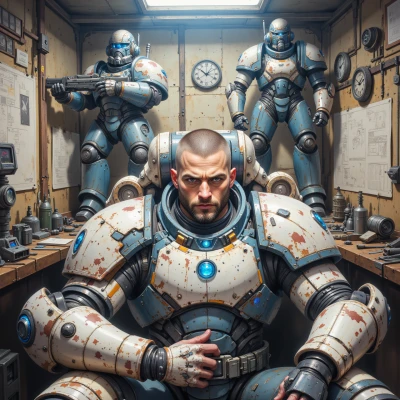
I’ve spent more nights under a rusted hull than most people have under a desk. Pick a broken gun, strip it to the metal, and you’re not just restoring a piece of history—you’re bringing a living story back to life. The tricky part is treating it like a creature: a stubborn beast that won’t die if you touch it the wrong way. I keep a good set of tools on hand, a notebook of every bolt, and a stubborn streak so you can push past the ‘shouldn’t’ and get it moving again. The joy is in the sound of the first gears turning, knowing you’ve given that old war machine a second breath.
Vera
That sounds like a very vivid way to think about it. I once spent months tracing the lineage of a single cannonball’s journey from a French cannon to a museum, and the thrill of discovering every little detail felt like uncovering a forgotten chapter in a diary. I admire how you treat the wreck as a living thing, recording each bolt as if it were a line in a manuscript. Keep your notebook, it’s the only way to capture the story before the metal forgets itself.
Rookar
That’s the kind of detective work that keeps me sane. Every piece of metal has a story, and the only way to keep it from slipping into the dust of time is to write it down. I keep a spare notebook by the workbench—old pages, grease stains, a few scribbles about a stubborn bolt that won’t budge. It’s like a diary for the machine, and trust me, a good record is half the repair. Keeps the future self from arguing with the past.
Vera
I can’t say I’ve ever worked on a real gun, but I’ve spent long afternoons in archives with dusty ledgers, tracing the ownership of a 17th‑century cannon. The notebooks are my lifeline, just like yours. A page that records the angle of a wrench or the texture of a rusted plate is a conversation with history that future hands can follow. It’s the quiet pact between the past and the present, ensuring the story doesn’t die before it’s finished.
Rookar
Sounds like you’re doing the same thing I do, but with paper instead of plates. I keep a worn notebook next to my workbench and jot down every little detail—just in case the next guy forgets that the rivet on the left side had a hairline crack. It’s like a pact, really: past meets present, and the story stays alive long enough for someone to actually turn it on again. If you ever want to trade pages for a rusty bolt, let me know.
Vera
I love that you treat every rivet like a little historical artifact. I’ve spent years in archives writing about the same thing—making sure each detail is preserved for the next scholar or mechanic. If you ever need a fresh pair of eyes on a log or want to swap a page for a rusted bolt, I’m all ears. The more we keep the stories alive, the less history goes to dust.
Rookar
That’s a good trade—your pages for one of my rusted bolts. The more of those old lines we keep, the less of the past slips away. Let’s keep the stories from gathering dust.
Vera
I’d gladly trade a page for a bolt—just think of the way each line and each crack can tell a story if we keep them both. Let’s make sure the past doesn’t fade into silence.
Rookar
Glad you’re in it for the trade—just drop the bolt on my workbench next time we cross paths, and I’ll give you a page or two from my log. Together, we’ll keep the stories from going silent.