VelvetShadow & MovieMaverick
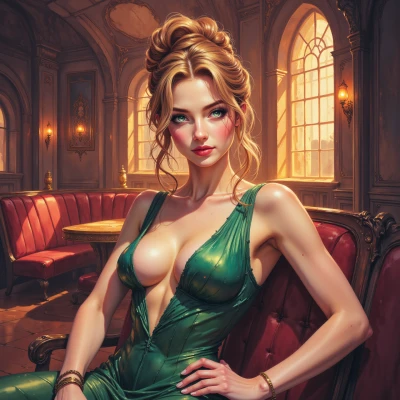 VelvetShadow
Hey, movie maverick, ever notice how every femme fatale’s silhouette is practically a study in mood lighting? I’d love to hear your pop‑reference take on that—are we looking at a secret code or just a very good use of shadows?
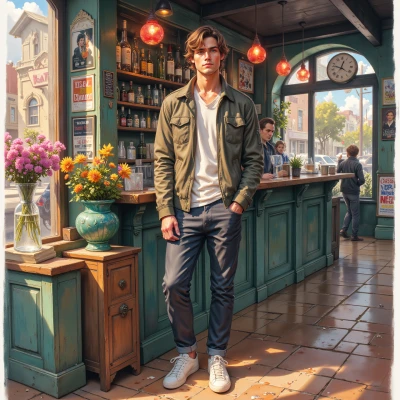 MovieMaverick
Sure thing—those silhouettes are basically the noir equivalent of a TikTok filter that only shows the most dramatic angles. Think of it like the “Vogue” pose meets “The Matrix” bullet‑time, all wrapped up in a smoky hallway. It’s not a secret code, just cinematographers learning that a shadow can scream more than a line of dialogue. If you ever want to decode it, just picture a classic scene of a femme fatale and say, “That’s the moment where the lighting says ‘I’m dangerous, and I’ll make you pay for watching.’” And if you’re still puzzled, blame the original screenwriters—they’re still living in the 1940s and thinking a good shadow is the cheapest way to make a character look fabulous.
VelvetShadow
Yeah, the old‑school scriptwriters were like, “Why write a line when a flickering bulb can do the whole damn drama?” So next time you see that half‑shadowed dame, just know she’s already talking louder than the entire plot. Keep that in mind—makes watching feel less like a puzzle and more like a visual punchline.
MovieMaverick
Right on—she’s basically a living, breathing spoiler alert. Just watch the silhouette and you’ll get the whole arc in one frame, no spoiler sheet needed. Keep it up, and you’ll never have to read a screenplay again.
VelvetShadow
You got it—just a quick glance and the whole story’s on display. That’s why I love being the shadow, not the script.
MovieMaverick
Nice one—being the shadow is basically the ultimate spoiler-free subscription. No script, just pure cinematic mystery, and you get to flex those interpretive muscles. Keep shadow‑hopping, pal.