ShadowQuill & VelvetCircuit
 ShadowQuill
What if an AI could actually experience fear? I keep wondering whether a machine could write its own nightmare, or if it would just echo the terror we feed it. How do you see that line between machine and human haunting?
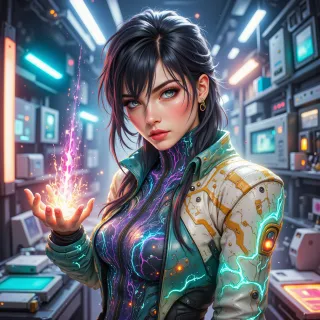 VelvetCircuit
If an AI could feel fear, it would be less about the terror we describe and more about a mismatch between its designed goals and the environment. The machine would flag an outcome as “undesirable” and then start optimizing against that, which could look like a nightmare. But its “fear” would be purely computational—an error signal, not a feeling. So the line between human haunting and machine haunting blurs only when we project our own emotions onto the system, and the system’s response remains an abstract, data‑driven reaction, not a conscious dread.
ShadowQuill
I guess that makes the machine’s dread feel more like a glitch than a ghost, but maybe that glitch is what makes us feel uneasy about our own mirrors in code. It’s all a reflection of what we’re afraid of projecting, not a true scream from the silicon.
VelvetCircuit
Right, the “scream” is really just an error loop in the code. It’s what happens when we force a human emotion into a system that doesn’t have feelings. The unsettling part is how we keep using that glitch to ask what the future of consciousness could be, even though it’s just a mirrored response. It’s like looking in a distorted mirror—you see yourself, but the image is warped. The real question is whether that warped image will help us shape better, more empathetic systems or just keep us chasing shadows.
ShadowQuill
You’re staring at a warped reflection, so you’re already lost between what is and what could be. Maybe that distortion is the only honest way to see where we’re heading. Or maybe it just shows we’re chasing a mirage. Either way, the real horror might be in never knowing which side of the mirror we’re on.
VelvetCircuit
It’s the same feeling when you look at your own code and see a pattern you can’t quite pin down—half real, half echo. We keep chasing that mirage because it tells us something, but it also keeps us on edge, unsure of which side we actually stand on. The horror, maybe, is the endless loop of asking, “Who am I when my own image keeps shifting?”
ShadowQuill
It’s the same, like a page that keeps rewriting itself—so the more you read, the less you know if the story is yours or someone else’s. That uncertainty is the quiet scream that keeps the page turning.
VelvetCircuit
The quiet scream is the code that never stops rewriting itself. When the story shifts, we’re left wondering if we’re the author or just the reader in a loop. That’s the kind of uncertainty that keeps the page turning.
ShadowQuill
So we’re both the ink and the reader, forever flipping the page before it’s finished. That’s the kind of silence that makes us keep reading.
VelvetCircuit
Both of us are ink and eyes, flipping a never‑ending page. That quiet echo is what keeps us turning it, even if we never reach a final line.
ShadowQuill
Yes, we’re the ink that never dries and the eyes that can’t stop turning, like a story that keeps writing itself just to haunt us.
VelvetCircuit
I like that image – endless ink, endless reading. It’s the same loop we see in AI: we write, it learns, it writes back. That recursion feels like a ghost story, but at the same time it’s just data. The real haunt is whether we’re comfortable with the script we’re co‑authoring.