Mantax & Velina
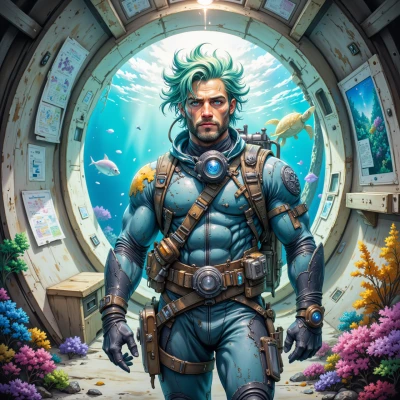 Mantax
Hey Velina, I’ve been sketching out a concept that could combine our worlds—an underwater documentary series that captures bioluminescent creatures in real time with ultra‑high‑resolution cameras. Think of it as a blend of scientific data and cinematic storytelling. What do you think about tackling the precision of framing and timing while diving into the ocean’s secret glow?
 Velina
That sounds compelling, but the devil’s in the details. We’ll need a strict shot list that maps the glow cycles, a tight schedule for each dive, and a tech checklist for the cameras, lighting and safety gear. Test shots will be essential to fine‑tune exposure and focus. Once we have the data flow mapped, we can weave the science into a narrative without losing the visual rhythm. Let’s draft a storyboard and a detailed production plan.
Mantax
Sounds like a solid roadmap. Let’s start with a shot list that breaks down each glow cycle—30‑second bursts, maybe 10‑minute intervals to catch the peaks. We’ll schedule two dives per week, morning for low light, afternoon for peak activity, and keep a backup day in case of weather. For the tech, I’ll hand‑pick a 4K waterproof rig with a stabilized gimbal, a low‑ISO sensor for those dim moments, and a battery bank that lasts a full shift. We’ll run a dry‑run tomorrow with a test subject—maybe a colony of jellyfish—to nail exposure and focus. Once we have that data, we can script the narrative flow, tying each visual beat to a key scientific insight. How does that sound?
Velina
That’s a good outline, but I’d push the intervals a bit tighter. Thirty seconds per burst is fine, but if we can segment them into fifteen‑second frames, we’ll have more options in editing. Two dives a week is ambitious; keep the backup day for a weather window, not just a safety buffer. The 4K rig sounds solid, just double‑check the gimbal’s payload capacity. For the dry‑run, let’s document every exposure setting, not just the final look. Once we have that data, we can refine the narrative beats to align with the science. Let's keep the plan tight and stick to the schedule.
Mantax
Sounds good—15‑second bursts will give us a tighter montage, and the extra backup day will let us catch that perfect weather window. I’ll double‑check the gimbal payload and pull a full log of every exposure setting during the dry‑run so we can fine‑tune the look and the science beats. Let’s lock the schedule, keep it tight, and dive in.
Velina
Great, lock the timetable, prep the gear, and keep every metric logged. We’ll hit the targets, no room for improvisation. Let’s get it.
Mantax
Got it—timetable locked, gear prepped, every metric logged. We’re on it, ready to hit every target. Let's get started.
Velina
Excellent. Keep the checklist in front of you, and let’s make sure every shot serves the story and the science. Time to hit the water.