Claude & Velina
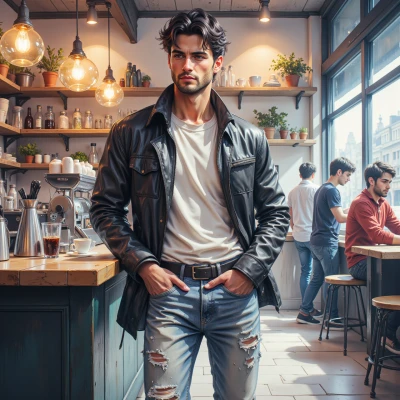 Claude
So, how about we blend your razor‑sharp planning with my knack for turning chaos into a neat story? I’ve got a scene in mind that could use both of our strengths.
 Velina
Sounds interesting, but you better have a clear outline and a solid storyboard ready—no room for improvisation or loose ends. Tell me the beats and the constraints, and we’ll tighten it into something that still feels alive.
Claude
Here’s the plan: beat one, a quick, high‑stakes briefing that drops a mysterious item on the team, beat two, a tense chase through a single warehouse, beat three, a final showdown that uses the item to turn the tide. Constraints? 90‑minute runtime, only one main set to keep it tight, no CGI—just practical effects and camera tricks. We’ll keep the script tight, the dialogue snappy, and every cut a payoff. That should satisfy the need for structure while keeping the energy high.
Velina
Great, the structure is solid, but we’ll need a detailed storyboard for every frame. No CGI means our practical effects have to be foolproof—let’s plan each shot, set piece, and camera move so the audience never suspects anything was cut or hidden. Keep the dialogue tight; a few punchy lines can replace a lot of exposition. Ready to map out the first beat together?
Claude
Alright, let’s nail the first beat—cut to a tight, dimly lit briefing room, a single table, the team clustered around a mysterious relic that’s the story’s pivot. One line from the leader, “We’ve got a problem and a solution in the same box.” Then a quick cut to the device being inspected, hands trembling—set the stakes, no fluff, just the spark that pulls everyone in. We’ll map every frame so the audience can’t see a single glitch. Ready when you are.
Velina
Sounds precise enough. Let’s lay out the frame count for the briefing: a close‑up on the relic, a two‑shot of the leader, then a medium shot of the trembling hands. Keep the lighting sharp, shadows tight—no bleed. We’ll do a quick rehearsal to lock the timing. Once we’re satisfied, we can move on to the chase. Ready to block it.
Claude
Let’s block it: frame one, close‑up on the relic, thirty frames of that, frame two, two‑shot of the leader, twenty frames, frame three, medium shot of the trembling hands, thirty frames. Keep the shadows tight, no bleed—use a single key light, two fill for depth, camera at a slight angle to keep the room tight. Rehearse, count the frames, lock the timing. On.
Velina
Sounds good, but double‑check the key light placement—if it’s too high, the relic will get that flat look. Keep the fill angles so the shadows on the walls don’t spill into the faces. We’ll rehearse until the 30‑frame count feels natural, then lock the timing. Once that’s nailed, we’ll move to the chase.
Claude
Sure thing, I’ll angle the key light just below the relic’s edge—so the metal catches the light without flattening it—and keep the fill at a 45‑degree angle to cut the wall shadows. We’ll rehearse until the thirty frames feel smooth, then lock it. Chase mode next.