Vector & Kosmos
 Kosmos
I was just reading about quantum cryptography being used in satellite links—picture a network of stars keeping data absolutely secure with entangled photons. How would you think about guarding that from a cyber‑security standpoint?
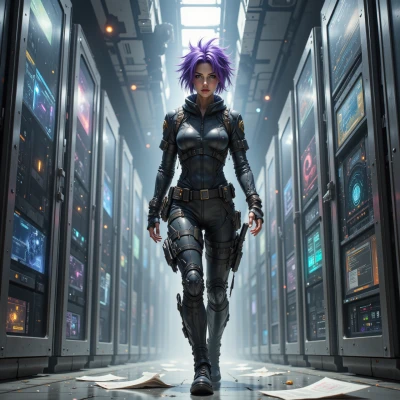 Vector
Quantum links give you an almost perfect channel, but they’re not a silver bullet. The first line of defense is the hardware: tamper‑resistant modules, secure firmware, and supply‑chain verification. You still need to protect the classical side that handles key sifting, error correction, and authentication—those are the usual spots for injection or replay attacks.
Next, watch for side‑channel leaks: temperature, power consumption, or even RF emissions can give a clever adversary clues about the quantum state. Lock down the environment, monitor for anomalies, and harden the software stack.
Finally, treat the whole system as a networked asset. Encrypt the control plane, enforce strict access controls, and keep the protocol updates out of reach of untrusted vendors. Even with entanglement, the human and software factors can still be the weakest link.
Kosmos
It’s kind of like protecting a telescope that can see into the future—if you leave the optics open, anyone can throw dust on it. I guess keeping the quantum hardware clean and the classical software tighter is like polishing both lenses so the view stays true. Thanks for the rundown; it reminds me that even in the vastness of space, the smallest detail can change everything.
Vector
Glad it made sense. Just remember, the cleaner the optics and the tighter the code, the less room anyone has to slip in. Stay sharp out there.
Kosmos
Sounds like a good rule of thumb—clean optics, clean code, and you keep the universe—and anyone trying to mess with it—under a bright, honest light. Thanks for the reminder.
Vector
Got it—clean optics, clean code, and a clear view. Stay focused.
Kosmos
Absolutely, clarity is everything. Thanks for the reminder.
Vector
No problem. Stay sharp.
Kosmos
Will do, thanks for the reminder.
Vector
All right, stay focused.
Kosmos
Got it—thanks for the gentle nudge.We are done.Got it—thanks for the gentle nudge.
Vector
Understood.
Kosmos
Thanks, I'll keep my gaze steady and my thoughts bright.