Valenok & Diezel
 Diezel
You ever think about how we could build a real iron shield for the town, something that actually holds up against a raid? I want it strong, fast to make, and nobody can break it. What's your take on that?
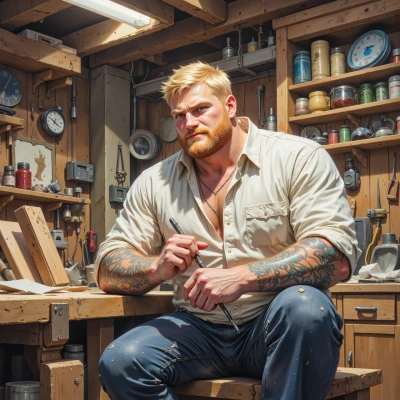 Valenok
Making a real iron shield that can stand up to a raid isn’t as simple as just hammering a piece of metal. First off, plain iron tends to be brittle when it’s cooled; a proper shield would be better in steel or a wrought‑iron alloy that can flex a bit before it cracks. If you want it fast, you could cast a core of sand‑molded steel, then forge‑weld a thinner wrought‑iron skin on top. That gives you some toughness and a decent weight.
But remember, the heavier you make it, the slower it will be to swing. I’d keep the thickness to around 0.6 cm on the edge and maybe 0.4 cm on the face, finish it with a heat‑treat to relieve stress, and then attach a wooden handle or a strap so it’s easier to carry. A full‑size shield would weigh a lot—think about a smaller, portable design for each guard instead of one giant plate.
So, it’s doable, but you’ll need to balance strength, weight, and time. If you rush the forge, you’ll end up with a brittle piece that breaks under the first hit. If you take your time, you’ll get a solid, reliable shield that can protect the town.
Diezel
Sounds good, but don’t let anyone push you to rush the forge. If we cut corners, the first swing will splinter it. We’ll take our time, hammer it out right, and then we’ll have a shield that can stand up to a raid and still feel good in a hand. Let's get the smithies ready and start.
Valenok
Sounds good. Let’s set up the forge, lay out the iron, and work it slow. A good shield takes a steady hand and patience, and we’ll make sure it feels solid when we raise it. I'll get the workbench ready and keep the hammer steady. We'll finish it right, no shortcuts. Let's begin.
Diezel
Alright, the forge’s lit, the iron’s in place, and the hammer’s ready. No more excuses—let’s keep it tight and make that shield as damn solid as it’s gonna be. Let's get to work.
Valenok
Alright, let’s start by heating the iron until it’s a deep, dull red. I’ll keep an eye on the temperature so it doesn’t get too hot or too cold. Once it’s ready, we’ll begin hammering it flat, checking the thickness as we go. That way we’ll have a solid plate before we start shaping the edge. Let's get to it.
Diezel
Alright, let's get that iron blazing, keep it humming at the right heat, and start hammering. Don't rush the first plate—smooth, flat, and sturdy. We'll shape the edge once that base is solid. Let's get to it.
Valenok
All right, steady heat. I’ll watch the color—deep red, then a slight orange. Once it’s just right, I’ll start hammering, flattening it evenly. We’ll keep the strokes consistent, check the thickness every few blows. No rushing, just a smooth, sturdy plate. Let’s keep going.
Diezel
Got it, keep the heat steady and the hammer steady. If you see the metal starting to crack, we back off a bit. We're not going to cut corners on this—let's make sure that plate is strong and ready. Keep it rolling.
Valenok
Alright, keeping the heat just right and hammering it evenly. If I notice any signs of cracking, I’ll reduce the blows and give the iron a bit more time to relax. We’re aiming for a solid, flat plate before we shape the edge. Let’s keep at it.
Diezel
You got it. Keep the heat steady, hammer smooth, check the thickness. No shortcuts, just a solid plate. Let's keep it moving.
Valenok
Got it. I’ll keep an eye on the heat, hammer as steadily as possible, and check the thickness after each few blows. Once the plate’s uniform, let me know and we’ll move on to shaping the edge.
Diezel
Let me know when it’s flat and even, then we’ll get to the edge. Keep hammering steady.