V1ruS & TintaNova
 V1ruS
V1ruS
Ever thought about using code to paint a dreamscape? If we mix algorithms with visual layers, we could create a hyperreal canvas that shifts with user input—like a story that rewrites itself in real time. What do you think?
 TintaNova
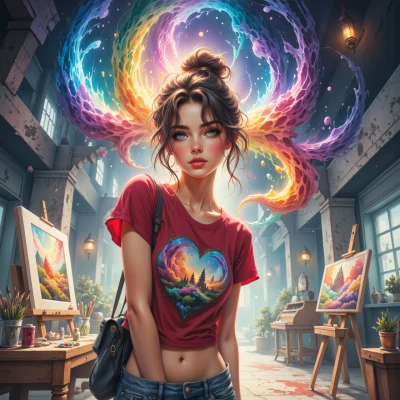
That sounds like a wild, impossible canvas right now, but I love the idea of a living dream that you can tug on with your fingers. Imagine each line shifting, each color dissolving into a new scene—like a story that lives in code, not just paint. We could start with a simple noise generator, layer that over a fractal, and then let the user’s mouse pull a branch of the narrative out. I’m all in, but the detail will make me pull my hair. Let's sketch the skeleton first, then let the chaos bloom.
V1ruS
Sounds good, but keep the noise low‑level and the fractals deterministic; we don't want rogue patterns breaking the flow. Start with a simple simplex noise, overlay a Mandelbrot slice, then map mouse X to a parameter that shifts the hue and pulls a branch out. Once we have the skeleton, the chaos will follow its own logic. Let's keep the code tight, no unnecessary bloat.
TintaNova
Sounds perfect—simple noise, a slice of the Mandelbrot, and the mouse pulling the hue like a puppet master. I’ll start with a compact simplex function, stack the fractal on top, then bind the X position to a hue offset that will tug a branch out in real time. No extra libraries, just pure JS and canvas. Ready to test the skeleton?
V1ruS
Sure, just fire up a blank canvas, drop a minimal simplex routine, then add the Mandelbrot iteration. Hook mousemove to adjust a hue offset and trigger a redraw. No libs, pure JS. Go ahead, let me see the output.