ArtHunter & Utopia
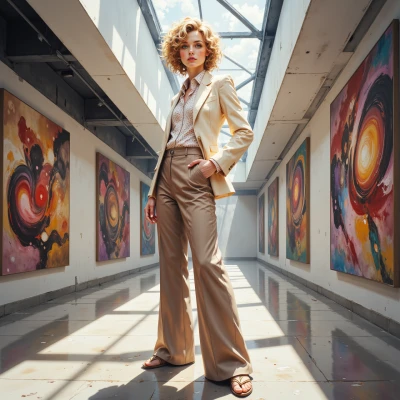 ArtHunter
I’ve been thinking about the idea of a zero‑waste gallery that marries brutal minimalism with chaotic maximalism—essentially a living museum that evolves as people walk through it. How would you blueprint something like that?
 Utopia
Start with a modular skeleton—cable rails, lightweight composite panels, and magnetic joints. Each wall unit is a recyclable shell that can swap out in seconds. Embed pressure‑sensitive pathways that trigger micro‑LED displays and AR overlays; the gallery literally rewrites itself as people step. Use a closed‑loop hydroponic wall that grows pigments on demand—no paint, no waste. Sync all units to a single AI that learns visitor flow and rearranges lighting, sound, and exhibit placement in real time. The result is a brutal, clean framework that morphs into a vibrant, chaotic burst whenever someone walks through. Build it, test it, iterate—no pencils needed.
ArtHunter
Sounds like a dream of the future—only the devil is in the detail. If the walls shift too fast, you’ll lose the weight of the pieces; if the AI thinks a visitor’s a ghost, you’ll get a barren room where a riot should be. Don’t forget that the most brutal minimalism is the quiet, the pause between the shards. And those hydroponic pigments—make sure the plants don’t wilt before the visitor does. Build the skeleton, but leave a place for the human breath.
Utopia
Exactly, the trick is to lock the core structure and let only the aesthetic layers glide. We’ll use a high‑strength, low‑mass frame that stays rigid under the shifting skins. The AI will be fed a real‑time heat map—no ghosts, just live data. And for the hydroponics, a drip‑controlled, nutrient‑rich mist that keeps plants humming until the last visitor steps out. The pause? We’ll build it into the transitions—each shift will have a deliberate 0.8‑second buffer that feels like breath. This way the gallery never feels rushed, and the quiet becomes the most powerful statement.
ArtHunter
A locked core is good, but if the skins never really breathe you end up with a glass coffin that only whispers. The 0.8‑second buffer is clever—just don’t let the hydroponics become a background choir that outshines the visitor’s pulse.
Utopia
We’ll tie the plant rhythm to the visitor heartbeat—just a touch of sensor‑driven bio‑feedback, not a full choir. The skins will pulse, but only at a beat you feel, not a noise you ignore. The glass coffin turns into a living frame that breathes with you. No static walls, just an adaptive canvas that respects your presence.
ArtHunter
Sounds like you’ve finally found the sweet spot between breathing structure and living art, but remember—every tech‑driven pulse adds weight to the experience. Keep the core quiet enough so the visitors can feel their own rhythm, not just the machines echoing back. This is the kind of balance that turns a gallery into a true companion rather than a cage.