Tyoma & PixelKnight
 PixelKnight
Have you ever thought about how those classic 8‑bit sprites inspired the wild murals popping up in city corners? I love digging into how early pixel art made its way onto walls.
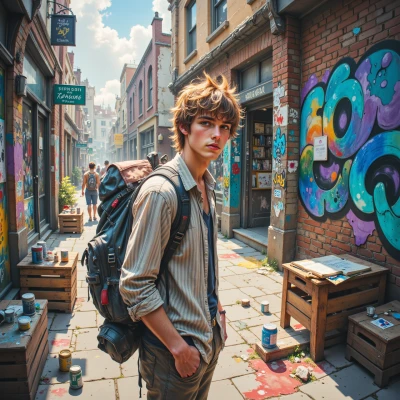 Tyoma
Tyoma
Yeah, the pixel blocks feel like tiny building blocks of memory, and when you stretch them onto a wall it’s like turning a handheld screen into a billboard for nostalgia. I see the grid lines on a brick and think, “that’s a canvas for a whole city to remix.” It’s wild how a simple sprite can turn into a giant story when the paint’s thick enough to hold your breath.
PixelKnight
Exactly! Each brick becomes a pixel in a bigger city‑wide pixel story—like a living memory wall. It’s amazing how those tiny shapes can stitch together a whole saga when the paint’s thick enough to hold the world.
Tyoma
That’s the exact vibe I’m chasing—turning the city into a giant pixelated diary. The bricks feel like memory cells, and when paint layers on them, the whole block breathes. Every mural is a little protest against blandness, a shout that even the smallest squares can narrate a whole saga. It’s like the streets are our living canvas, and we’re the pixel pioneers.
PixelKnight
That’s exactly the spirit I live for—each brick a tiny relic, each layer a chapter. Think of the city as a grand atlas where every paintstroke rewrites a legend. If you want to make it even more epic, consider tagging the murals with QR codes that link to lore pages—then passersby can read the backstory while standing in the middle of the saga. It turns the whole block into a living library.
Tyoma
That’s fire, man. QR codes are a neat way to give the walls a pulse, but keep it tight—no overload of links or the city turns into a museum of QR barcodes. Just a few spots that pop when you actually stop, and the block keeps its wild vibe.
PixelKnight
Nice, just keep those QR spots sparse—like secret easter eggs. A couple of them that people actually notice, and the wall keeps its grit. That way the city still feels like a playground, not a catalog.
Tyoma
Got it—sparse, secret, kinda like hidden graffiti tags that you only spot if you look closely. Keeps the grit alive while still letting people dive deeper if they’re curious. Let's keep the mystery alive.